
For most first-time safari travellers, I recommend Tanzania. If you are doing a driving safari, Tanzania has the shorter driving distances. If you are flying between camps, Kenya is just as good. Kenya is the better choice if you want to see rhino, enjoy walks and night drives in a private conservancy, or want ethical animal experiences such as the Giraffe Centre and the Sheldrick elephant orphanage.
Kenya and Tanzania are both superb for a first safari, and the right one depends on how you like to travel, when you can go and how much time you have.
I am asked this question more than any other. I live in Enonkishu Conservancy in the Maasai Mara, so I know the Mara well, but I also lived in Tanzania for over 3 years and have travelled a lot in Tanzania. They both have their pros and cons and I will tell you plainly which I think is the better choice for you once I understand what you are looking for. But for a general overview keep reading.
Living in the Mara, this is the thing that changes how you see it. The Serengeti and the Maasai Mara are, in the eyes of the animals, the same place. It is one ecosystem, and it’s only the country border that splits it in two. The wildebeest cross back and forth as if the border was not there. So there is no reason to go to both sides, unless you are just trying to tick off countries.
If you want the short version before the detail:
- Choose Kenya if you want smaller, quieter camps in private conservancies, the freedom to go on walks and night drives, and a better chance to see Rhino.
- Choose Tanzania if you want vast, wild landscapes, the Ngorongoro Crater, you are travelling in the months when the herds are in the Serengeti or you want shorter drives between locations.
Whatever you choose, the most important decision is not the country. It is who plans your trip and where you stay.
The wildlife is wonderful in both
You will see lion, elephant, giraffe, zebra, buffalo and more than enough birdlife in either country. The Maasai Mara in Kenya and the Serengeti in Tanzania are in fact one connected ecosystem, and the wildebeest herds move between them throughout the year. The difference is not what you see. It is how you see it.
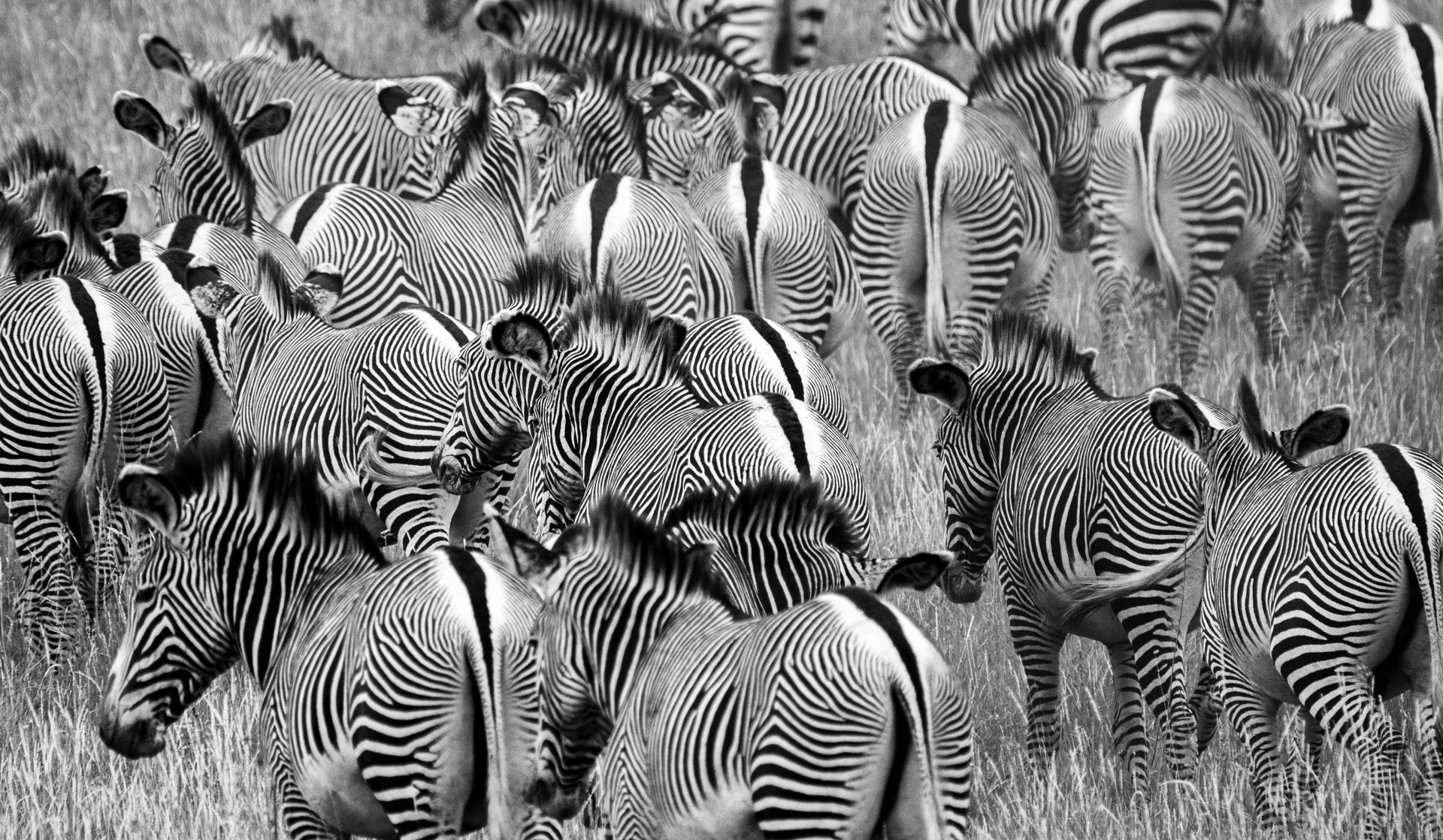
Kenya has a bit more variety given that it has desert-adapted animals north of the equator. A trip to Samburu, Lewa, even Shaba, gives you the opportunity to see Grevy’s Zebra, Beisa Oryx, Reticulated Giraffe (the most beautiful of the giraffe species in my opinion), Vulturine Guineafowl, Somali Ostrich and one of my favourite, the Gerenuk.
It is well worth a visit north of the equator in Kenya to catch a glimpse of these if you have never seen them.

How you experience a safari is different
In Kenya, much of the best wildlife viewing is in private conservancies next to the national reserve. Fewer vehicles are allowed, camps are small, and your guide can drive off the road, take you out on a walk or go out after dark. That is how you see relaxed animals and natural behaviours rather than the animals riled up and on edge, as they can be inside the national parks where there are lots of vehicles and overcrowding.
Most Tanzanian national parks keep vehicles on the tracks and do not allow walking or night drives. In exchange, you get enormous, open landscapes that feel endless, and the Ngorongoro Crater, where a great number of animals live in one volcanic bowl. There are also private areas in Tanzania where the rules are more flexible, so it is worth asking before you book.
What the migration means for your dates
The great wildebeest migration is a year-round circle, not a single event. As a general guide, the herds are usually in the Maasai Mara from around July to October, where the Mara River crossings take place. The herds are crossing between the northern Serengeti and the Mara, so you can see them from either side. From roughly January to March they are in the southern Serengeti, where the calves are born. Outside those windows, there is still plenty to see, and the camps are often quieter.
I will never forget my first migration, in 2015. I did a combined Kenya and Tanzania safari with a friend, and I had never seen anything like it. There were animals as far as I could see, so many that they looked very, very small on the plains. It is a sight that stays with you.
If the river crossings are your priority, think about Kenya or northern Serengeti in the second half of the year. If it is the calving season, Tanzania is the better fit. No one can promise a crossing on a given day, and I would be wary of anyone who does.
Kenya and Tanzania side by side
| Kenya | Tanzania | |
|---|---|---|
| Famous for | Maasai Mara conservancies, Amboseli, Laikipia, Samburu | Serengeti, Ngorongoro Crater, Tarangire |
| Walking and night drives | Yes, in private conservancies | Yes, in private wildlife management areas |
| Getting there | Fly into Nairobi, then a short flight to the Mara | Fly into Kilimanjaro or Arusha, then light aircraft/drive between parks |
| Beach add-on | Diani or Lamu | Zanzibar |
When to go
If you are free to choose, I would go in September. July and August are the busiest months and there are vehicles everywhere, especially at the Mara River. In September it is quieter, it is dry so the animals are easier to see, and the migration is still on. It is the month I recommend most often for a first safari.
If you have been before, or this is your third, fourth or fifth safari, the rainy green season is wonderful too. It is quiet, the landscapes are lush and the camps are at their best value.
How long you have matters
For a first safari, I plan one country at a time. If you have around ten days, trying to fit in both means spending much of it in the air or on the road. Seeing one place properly is more restful and more memorable. If you have two weeks or more, a combined trip can work well and I am glad to plan one.
A popular combined safari for around 2 weeks is a Gorilla trek in Uganda, followed by a traditional safari in Kenya/Tanzania, then some relaxation time at the coast.
I had guests recently who wanted to do both Kenya and Tanzania, but they did not have long enough. I told them it was better to choose one. In the end they chose Tanzania. It was their first safari and they did not want long drives. They were also interested in the migration, and at the time they wanted to travel, the migration was in Tanzania. It was an easy choice once we looked at it that way.
The Coastal extension
Both Kenya and Tanzania offer beautiful, white sandy beaches and crystal clear waters, a perfect place to relax after your safari before heading back to the rat race when you get home.
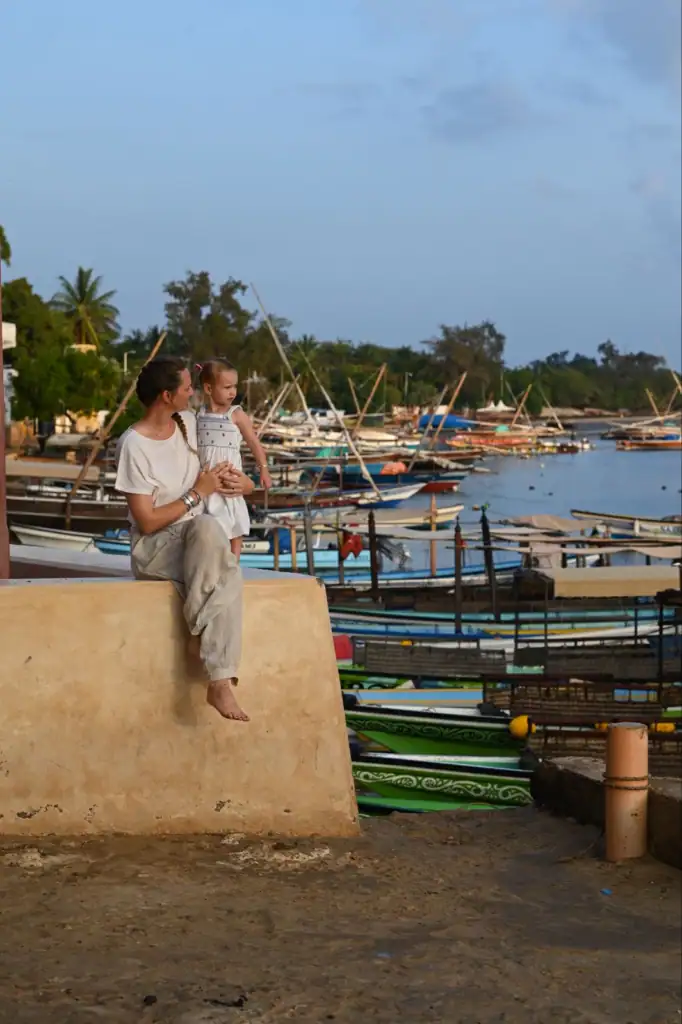
In Kenya you can go to Diani, Mombasa or a small island called Lamu. Lamu is my personal favourite as it also offers some variety in terms of cultures and it’s easier to be surrounded by the locals rather than tourists.
In Lamu you can stay in Shela for the beach area or Lamu town for culture. Think small cobbled streets, nooks and crannies, shops and markets, samosas and mandazis.
In Zanzibar make sure you have time to spend in Stone Town as well as at the beach. Depending on when your flight gets in/out I usually schedule 2 nights in Stone Town at the start or end of your time in Zanzibar.

So which one should you choose?
- You are travelling in January to March and want the calving season: Tanzania.
- You want the Crater and big, wide landscapes: Tanzania.
- You are travelling with children or want something gentle for a first trip: Kenya, with short flights, short transfers and family-friendly camps.
- You want to see rhinos: Kenya, specifically Lewa Wildlife Conservancy
- You are not sure: that is the most common answer I hear, and it is exactly what a conversation can sort out.
- You want ethical wildlife encounters: Kenya, there is giraffe manor/centre and Sheldrick Elephant sanctuary. I don’t send guests to the Tanzanian equivalents, because in my opinion they are unethical.
If a friend asked me tomorrow, I would send them to Tanzania first. I usually do for a first safari. The distances are shorter, the Serengeti is the top destination, and the migration is there for most of the year.
Frequently asked questions
Is Kenya or Tanzania better for a first safari? For most first-timers I recommend Tanzania. If you are doing a driving safari, Tanzania has the shorter driving distances. If you are flying between camps, Kenya is just as good. Choose Kenya if you want to see rhino, or visit the Giraffe Centre and the Sheldrick elephant orphanage.
Can I do both Kenya and Tanzania on one trip? Yes, but not on a short trip. For a first safari I plan one country at a time. If you have around ten days, trying to fit in both means spending much of it in the air or on the road.
When is the best time for a first safari? September. It is dry, so the animals are easier to see. It is quieter than July and August, and you can still see the migration.
Is the migration in Kenya or Tanzania? Both. The herds move in a circle between the Serengeti in Tanzania and the Maasai Mara in Kenya. Roughly July to October they are usually in the Mara, and from January to March they are calving in the southern Serengeti.
Let me plan it with you
You do not need to have this worked out before we speak. Tell me when you can travel, who is coming and what matters most, and I will give you an honest recommendation, whether that turns out to be Kenya or Tanzania. You won’t be disappointed with either. Every trip I plan is tailor-made, and I book it through ground partners I know and trust in Kenya and Tanzania.
Book a free safari planning call and we will talk it through.
Natasha
Your African safari expert
Which safari is right for you?
Answer a few short questions and I will show you the journey I would start from for your dates and the way you like to travel.
Take the safari quiz


0 Comments