The concept of an “Ultimate African Safari Adventure”, while a potent marketing phrase, represents a curated experiential journey rather than a singular, universally defined event. It encapsulates a comprehensive and often extended exploration of sub-Saharan Africa’s diverse wildlife, landscapes, and cultures, aiming to provide participants with profound encounters and a deep understanding of the continent. This undertaking goes beyond fleeting wildlife sightings; it is a commitment to immersion, demanding time, resources, and a willingness to engage with the raw, untamed beauty of the African wild. Think of it as a meticulously crafted symphony, where each movement plays its part in creating a resonant and unforgettable experience.
What Constitutes “Ultimate”?
The term “ultimate” is subjective and is often employed to signify the pinnacle of a particular experience. In the context of an African safari, it typically implies:
Depth of Wildlife Encounters
The Big Five and Beyond: While the “Big Five” (lion, leopard, elephant, rhinoceros, and buffalo) are iconic, an ultimate safari aims for more. This includes observing a wider spectrum of the continent’s fauna, from elusive predators like cheetahs and wild dogs to a myriad of bird species, primates, and smaller mammals. The focus shifts from ticking off a list to understanding ecological relationships and animal behaviours in their natural habitats.
Observational Context: An ultimate safari prioritises quality over quantity. This means spending sufficient time with animals, observing their social structures, hunting strategies, and daily routines. It’s akin to being a discerning observer at a grand natural theater, appreciating the nuances of each performance.
Immersion in Diverse Ecosystems
Variety of Biomes: Africa is a continent of stark contrasts. An ultimate safari often spans multiple ecosystems, from the vast savannas of the Serengeti and Masai Mara to the dense rainforests of Rwanda and Uganda, the arid deserts of Namibia, and the unique delta systems of Botswana. Each biome presents its own distinct set of challenges and opportunities for exploration.
Geographical Breadth: The “ultimate” experience may traverse national borders, connecting iconic parks and reserves that offer distinct ecological profiles. This breadth allows for a more holistic appreciation of African biodiversity.
Cultural and Human Dimensions
Indigenous Communities: Beyond wildlife, an ultimate safari often includes respectful interaction with local communities. This can involve learning about traditional ways of life, understanding cultural heritage, and witnessing the human impact on the environment. It’s about recognising that Africa is not solely a natural preserve but a vibrant mosaic of human cultures.
Conservation Efforts: A deeper understanding of conservation challenges and successes is frequently an integral part of an ultimate safari. This might involve visiting research centres, meeting conservationists, and learning about the efforts to protect endangered species and their habitats.
Quality of Experience and Logistics
Accommodation Standards: While varying from rustic bush camps to luxurious lodges, the accommodation is designed to complement the wilderness experience without detracting from it. Comfort and privacy are generally high, offering a sanctuary after days of exploration.
Expert Guiding: The role of experienced guides is paramount. They are not just trackers but educators, sharing their knowledge of ecology, animal behaviour, and local lore. Their expertise transforms mere observation into profound learning.
If you’re planning an African safari, it’s essential to stay informed about the latest travel information and tips. A great resource for this is the article titled “The Most Important Travel Info for East Africa: What You Need to Know in 2024,” which provides valuable insights into what travellers should consider before embarking on their adventure. You can read the article here: The Most Important Travel Info for East Africa. This guide covers everything from visa requirements to health precautions, ensuring you have a safe and enjoyable experience on your safari.
Key Regions for an Ultimate African Safari
The vastness of Africa offers numerous destinations, each with its unique allure. Certain regions have become synonymous with the pinnacle of safari experiences due to their exceptional wildlife densities, diverse landscapes, and well-developed infrastructure for high-quality tourism.
East Africa: The Plains and the Great Migration
East Africa, particularly Kenya and Tanzania, is famed for its iconic savannas and the spectacular Great Migration.
Serengeti National Park and Masai Mara National Reserve
The Great Migration: This is arguably the most celebrated wildlife spectacle on Earth. Millions of wildebeest, zebras, and other herbivores traverse the plains in search of fresh grazing, followed closely by a host of predators. The timing of this migration is dictated by the seasons, making it a dynamic and ever-changing event. Witnessing the river crossings, a true trial by fire for the animals, is a primal and unforgettable experience.
Predator-Prey Dynamics: The abundant prey base supports a healthy population of predators, offering excellent opportunities to observe lions, cheetahs, leopards, and hyenas in action. The open plains of these reserves allow for excellent visibility, making it a photographer’s paradise.
Diverse Habitats: Beyond the grassy plains, these areas also feature kopjes (rocky outcrops), acacia woodlands, and riparian zones, supporting a variety of species.
Amboseli National Park
Elephant Herds and Kilimanjaro: Amboseli is renowned for its large herds of elephants, often seen against the breathtaking backdrop of Mount Kilimanjaro. The park’s open plains and seasonal swamps attract these majestic creatures, providing incredible photographic opportunities.
Birdlife: The park is also a haven for birdwatchers, with a multitude of species found in its varied habitats.
Southern Africa: Deltas, Deserts, and Dense Wildlife
Southern Africa presents a different, yet equally compelling, safari experience, characterised by unique water systems and diverse desert landscapes.
Okavango Delta, Botswana
The Inland Delta: The Okavango Delta is a unique inland river system that floods seasonally, creating a vibrant oasis in the Kalahari Desert. This influx of water transforms the landscape, attracting a remarkable concentration and diversity of wildlife.
Mokoro Safaris: Exploring the delta by mokoro (a traditional dugout canoe) offers an intimate and serene way to experience the waterways and their inhabitants. Gliding silently through the channels allows for close encounters with aquatic life, birds, and terrestrial animals coming to drink.
Predator Sightings: The delta is home to a significant population of predators, including lions, leopards, cheetahs, and wild dogs. The water channels often serve as natural conduits for animal movement.
Kruger National Park and Surrounding Private Reserves, South Africa
High Wildlife Densities: Kruger National Park is one of Africa’s largest and most famous game reserves, boasting an exceptional diversity and density of wildlife. Its well-maintained road network allows for extensive exploration.
Private Reserves: Adjacent to Kruger, privately owned reserves offer exclusive safari experiences. These areas often have fewer vehicles, leading to more personal encounters, and employ innovative tracking techniques and off-road driving (where permitted) for superior sightings.
Diverse Flora and Fauna: The park encompasses a range of habitats, from savanna grasslands to woodlands and riverine forests, supporting a vast array of species.
Hwange National Park, Zimbabwe
Elephant Capital: Hwange is known for its massive elephant population, particularly during the dry season when animals congregate around the park’s waterholes.
Diverse Species: The park also hosts a wide variety of other large mammals and a significant number of bird species.
Central and East African Forests: Gorillas and Chimpanzees
For an experience that delves into dense forests and focuses on primate encounters, Central and East African countries offer unparalleled opportunities.
Volcanoes National Park, Rwanda
Mountain Gorilla Trekking: Rwanda is a premier destination for mountain gorilla trekking. Participants embark on hikes through dense rainforests to observe habituated gorilla families in their natural habitat. This is a deeply moving and life-changing encounter.
Conservation Success Story: The success of gorilla conservation in Rwanda is a testament to dedicated efforts, making the experience a blend of wildlife viewing and support for conservation initiatives.
Bwindi Impenetrable National Park, Uganda
Biodiversity Hotspot: Similar to Volcanoes National Park, Bwindi is a critical habitat for mountain gorillas, offering another exceptional trekking experience. Its dense forest canopy teems with a remarkable array of endemic species.
Primate Diversity: Beyond gorillas, Bwindi is home to chimpanzees and other primate species, as well as a rich diversity of birdlife.
Planning the Ultimate African Safari Adventure
Embarking on an ultimate African safari is akin to undertaking a significant expedition; it requires meticulous planning and a clear understanding of one’s objectives. It is not a spontaneous decision but a journey of deliberate preparation.
Defining Your Objectives and Interests
Wildlife Focus: Are you primarily interested in the Great Migration, Big Five sightings, birdwatching, or primate encounters? Your primary interests will guide your destination choices.
Landscape Preferences: Do you envision the vast plains of East Africa, the watery expanse of the Okavango Delta, or the dense forests of the Congo Basin?
Pace and Style of Travel: Do you prefer a fast-paced, multi-country itinerary or a slower, more in-depth exploration of a single region?
Choosing the Right Season
Dry Season: Generally considered the peak safari season in East and Southern Africa. Lower vegetation and concentrated water sources lead to increased wildlife visibility. However, this is also the most expensive and crowded time.
Wet Season: Offers lush landscapes, newborn animals, and often lower prices. Birdwatching is excellent, but some areas may become inaccessible due to rain, and wildlife can be more dispersed.
Shoulder Seasons: Offer a balance of good weather, manageable crowds, and reasonable prices.
Selecting the Right Safari Style
Luxury Lodges: Offer the highest levels of comfort, service, and amenities, often with private plunge pools and gourmet dining.
Tented Camps: Provide a more rustic yet still comfortable experience, often situated closer to wildlife action. They offer an authentic bush feel.
Mobile Safaris: Involve following the wildlife movements, with temporary camps set up in different locations. This offers great flexibility and access to remote areas.
Photographic Safaris: Specialised tours focusing on optimising photographic opportunities, often with custom vehicles and expert photographic guides.
Logistics and Itinerary Management
Duration: An ultimate safari typically ranges from two to four weeks, allowing ample time for travel between locations and in-depth exploration.
Transportation: A combination of light aircraft flights (bush planes) between remote camps and 4×4 safari vehicles for game drives is common.
Guides and Operators: Engaging reputable safari operators is crucial. They handle complex logistics, including flights, accommodations, park fees, and the arrangement of highly skilled guides. They act as the alchemists of your safari, transforming raw elements into a seamless experience.
Ethical Considerations and Conservation
An ultimate African safari should resonate with responsibility and a commitment to preserving the continent’s natural heritage. It’s not just about experiencing nature; it’s about contributing to its well-being.
Responsible Wildlife Viewing
Respecting Distance: Maintaining a safe and respectful distance from animals is paramount. Guides are trained to observe ethical viewing protocols to minimise disturbance.
Avoiding Feeding and Provocation: Never feed wild animals or attempt to provoke them for a reaction. This can lead to habituation, aggression, and harm to both the animals and humans.
Minimising Impact: Sticking to designated roads and trails within parks helps prevent habitat degradation.
Supporting Sustainable Tourism
Choosing Eco-Conscious Operators: Opt for tour operators and lodges that demonstrate a commitment to environmental sustainability, community engagement, and conservation initiatives.
Community Benefit: Look for itineraries that include meaningful interactions with local communities and ensure that tourism revenue benefits these communities directly.
Conservation Contributions: Some safaris may include opportunities to visit or contribute to local conservation projects, research initiatives, or anti-poaching efforts.
Understanding the Value of Conservation
The financial investment in an ultimate safari directly contributes to the economic viability of protected areas. This revenue stream is vital for funding anti-poaching patrols, habitat management, and community development projects, effectively creating a symbiotic relationship between tourism and conservation.
An African safari offers a unique opportunity to witness the incredible wildlife and landscapes of the continent, but it’s also essential to consider the conservation efforts that support these majestic creatures. For instance, the Reteti Elephant Sanctuary plays a vital role in protecting orphaned elephants and educating the community about wildlife conservation. You can learn more about this inspiring initiative by reading the article on the Reteti Elephant Sanctuary, which highlights how local communities are united in their efforts to safeguard these gentle giants.
The Transformative Impact of an Ultimate African Safari
Game drives, walking safaris, hot air balloon rides
Varied ways to experience wildlife
Average Daily Temperature
20°C to 30°C (68°F to 86°F)
Varies by region and season
Annual Visitors
Approximately 1.5 million
Tourists visiting African safari parks yearly
The experience of an ultimate African safari extends far beyond the mere observation of wildlife; it is often a profound personal journey that can alter perspectives and foster a deeper connection with the natural world. It’s like finding a hidden spring in the desert; its discovery is refreshing and life-affirming.
Reconnection with Nature
Escaping the Digital Haze: The absence of constant digital stimulation allows for a heightened awareness of the natural environment. The symphony of the bush, the vastness of the star-filled sky, and the raw power of the landscape demand your full attention.
Appreciating the Wild: Witnessing the intricate balance of ecosystems, the struggles for survival, and the sheer beauty of wild animals in their domain can foster a profound appreciation for the natural world and our place within it.
Personal Growth and Perspective Shift
Humility and Awe: Confronting the sheer scale and power of nature, from a charging elephant to a star-studded night sky, can evoke a sense of humility and awe, recalibrating one’s sense of self.
Resilience and Adaptability: Observing the resilience of wildlife in their often-harsh environments can offer valuable lessons in adaptability and perseverance.
Global Awareness: Understanding the interconnectedness of ecosystems and the challenges facing wildlife and communities can foster a broader sense of global responsibility and awareness.
Lasting Memories and a Call to Action
The memories forged on an ultimate African safari are indelible. The sights, sounds, and emotions experienced become part of one’s personal narrative. This profound connection often translates into a desire to advocate for the preservation of these wild spaces and the species that inhabit them. It is a journey that doesn’t just end with your return; it ignites a lifelong commitment to the wild heart of Africa.
Having pets inside a conservancy isn’t for the faint-hearted, I’m not sure how so many people do it unless they are permanently on edge like I am or they are the bloody dog whisperer.
I’ll be honest dog walks aren’t relaxing, clearing your head, de-stressing from the day, enjoyable moments they used to be. They are in fact the opposite, they are the stressful moments of my day. Still, if that’s all the stress I have at the moment in these difficult covid times then I have no right to complain.
In the spirit of not complaining, just merely explaining… Yesterday we had an incident involving Rafa (and even Roo go caught up in the action) and some sheep which wasn’t very pleasant… let’s just say Rafa will not be off the lead again for a very long time.
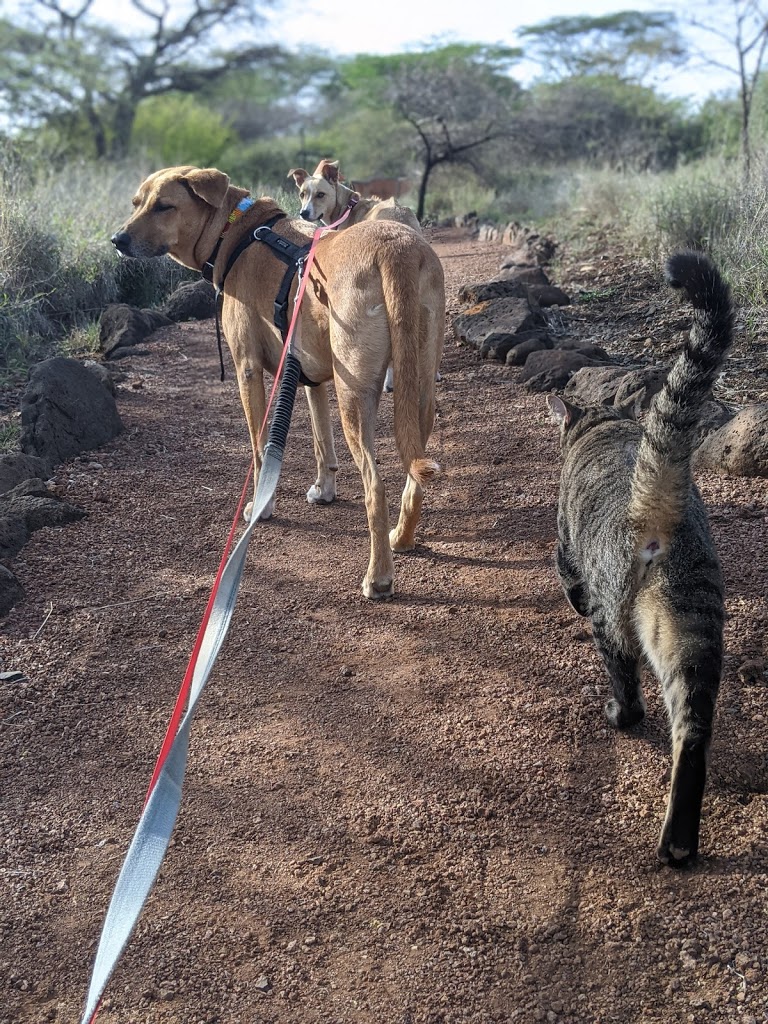
As a result, today I went straight back on the training with full force and went on our morning walk equipped with Rafa on a long rope and harness, Roo on her retractable lead and a treat bag full of meat! Once Rafa knew I had meat with me he was (momentarily) all ears. We were practising ‘leave it, look at me’ which is supposed to be a way to distract them when they become alert to something which they can chase. The idea being they then forget about the chase and you can continue your walk in a calm state. It does of course require impeccable timing, catching them just as their ears prick forward but before they have locked eyes on the target. Something which I discovered is very difficult when you have two dogs. Should you manage to avert their attention and get them to look at you, you then have to award them with a treat quick enough so that they don’t lose interest and go back to the chase. While thumbing for a treat to award the one dogs attention you do have, you are also struggling to stay upright as the other dog is giving you rope burns (guess which dog this is) as you didn’t manage to get his attention and he is still trying to chase the poor unsuspecting dik-dik. Getting the dogs to ‘look at me’ throughout the rest of the walk most of the time involved me waving some meat in front of their face and crouching directly in front of them to block their line of vision so they had no choice but to look at me, then rewarding them generously for forced eye contact. Think trying to talk to your boyfriend while Football/Rugby/insert sport here, is on the TV and thanking them profusely for taking 2 minutes out of the match to take their cup of tea from your hand.
The other element of training on the agenda, which has been on the agenda for about 6 years (guess how old Rafa is) is recall. Again the meat treats came in handy here but they were not always tempting enough to convince Rafa to come back. This is where the rope comes in, if they choose to ignore you, you are supposed to start reeling them in until they decide to come to you ‘of their own accord’. All very well except the harness, with the attachment on Rafa’s back, isn’t the best tool for this. When trying to reel him in he is pulled by his back instead of leading his head, as you would if it was attached to his collar. Commence Rafa trotting in sideways dressage style like a not so posh pony. Otherwise, twisting, hopping and skipping trying to get get the tangled rope out from under his belly, around his legs and under his tail. I am frequently getting stuck one arm on either side of tree trunks, legs tangled up with ropes and leads and spinning around in an attempt to not restrict myself straight jacket style, arms crossed in front, dog pulling either side. I feel if someone was to record our training sessions they would be used as the ‘how not to do it’ examples.
Disclosure: I am (clearly) by no means a dog training expert, yes my dogs can sit, lie down and give me their paw for a treat (Roo can even play dead when shot) but all of my training knowledge comes from youtube videos and good old Caesar. I would not advise you to try to replicate my training methods. In fact, if anyone has any advice or tips for me I would welcome them with open arms!
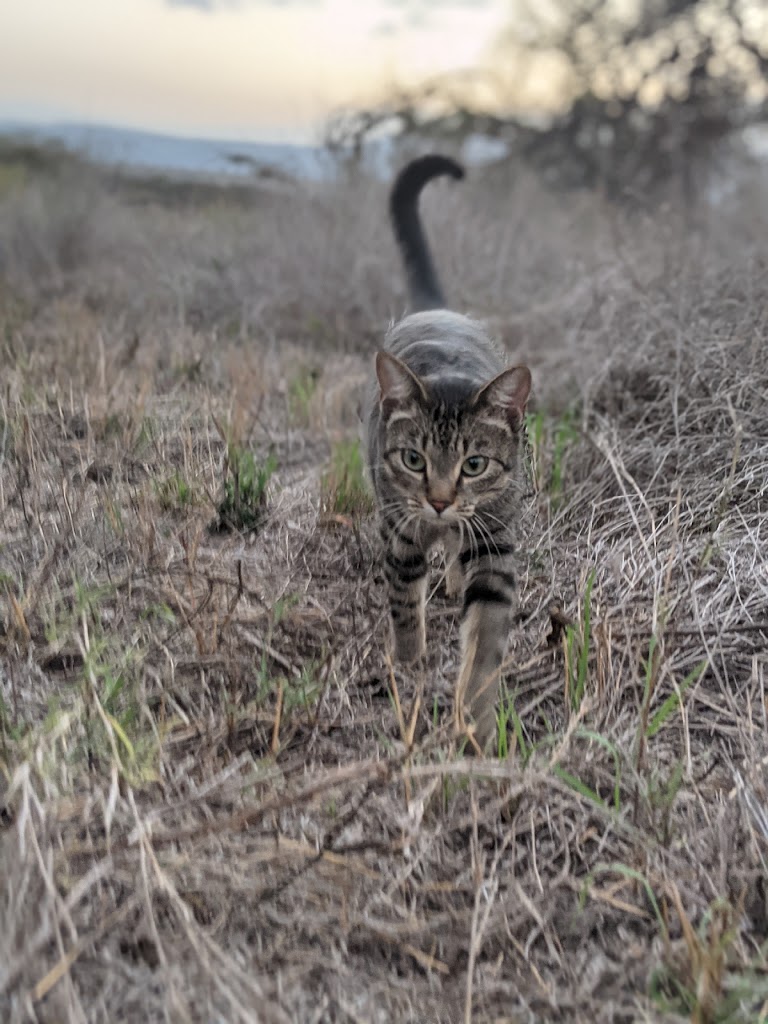
This evening was an equally unrelaxing walk, a repeat of rope burns, tangles, forced eye contact and bribes but with the added extra of fading light and Duma appearing behind us merrily trotting along at the point furthest from the house.
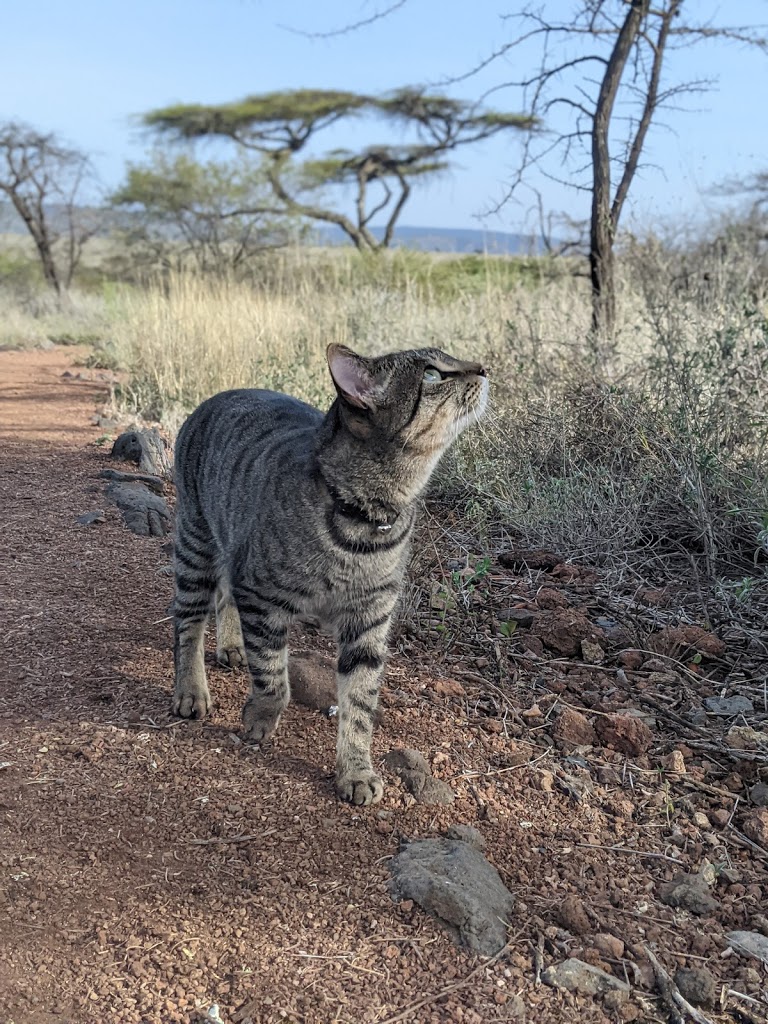
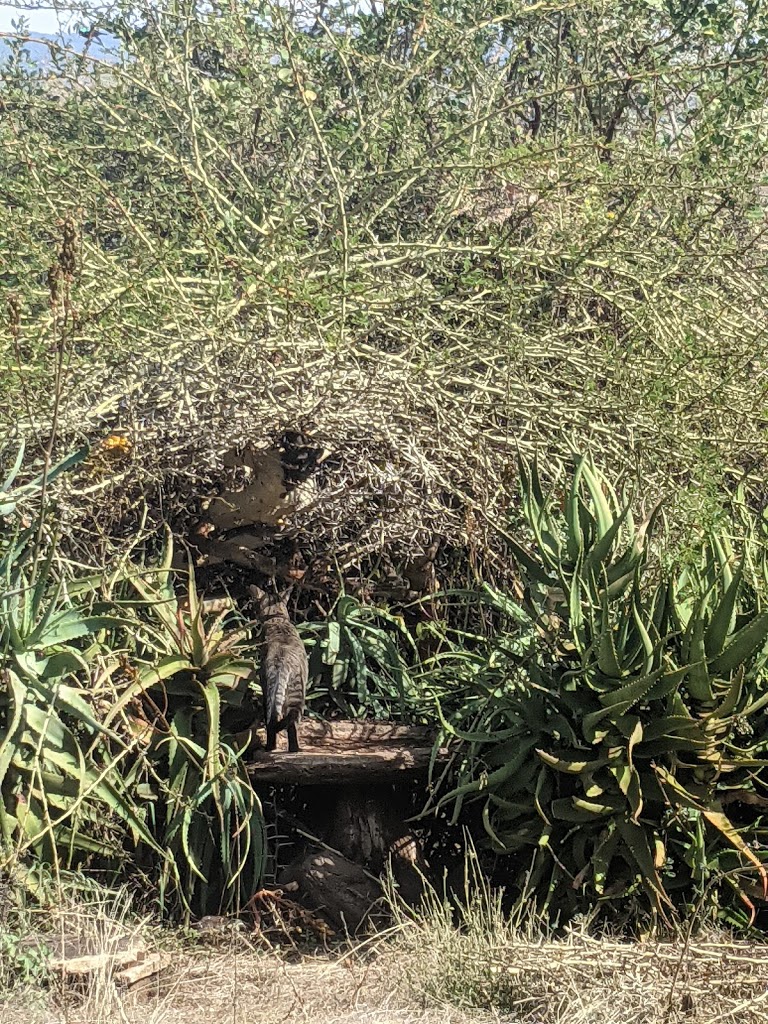
Duma then casually strolled behind us at her own steady pace, frequently stopping mid-track to stare alertly into the thicket. In contrast to trying to break her stare as I had been trying to do with the dogs, I was freaking out and attempting to follow her stare to try and figure out what she was staring at. Duma of course being prey as opposed to the predator I was worried she had seen something that could eat her. I attempted to speed up the pace to get home before dark and to try and avoid the resident leopard in the area. However there was no rushing Duma, it was also impossible to pick her up and hold two dog leads attached to disobedient chasing dogs. We continued on as fast as Duma would allow and managed to get home without any casualties.
I cannot wait for the garden to be finished. In theory, we can then allow duma into the garden and she shouldn’t be able to get out of the new bigger garden. I’m sure she will figure out a way eventually but it’s a start. The poles for the fence are all up and the wire is starting to go in. Charl has uprooted all of the aloes that border the current fence (great for attracting sunbirds to the garden) and we will then pull down the current fence and plant them along the perimeter of the new fence which should be finished in the next couple of days.
I may also have attempted to put paw prints in the concrete by the gate but I was too late ☹️ I remember my brothers and I putting handprints in the concrete at my Nana’s house when we were young.
Today’s walk was slower than usual as we had an extra body with us, Duma decided to join us on our morning stroll, this is not unusual for Duma and something that is definitely needed. Since being an indoor cat she has put on a few pounds so it’s good that she is getting some exercise. It did mean we had to walk significantly slower than usual and less distance but I will take the dogs out again later for a long walk to make up for it.
I have moved the blogging party outside today and my loyal dogs are laying calmly next to me while Duma explores the birdbath and bird feeder, so that might be the end of feathery visitors for a while.
I spoke to a friend yesterday about someone they know who works in a school in Nanyuki, he used to know her in Mongolia and has given her my number so we can get in contact. Her father also used to work in Lewa so she knows the area so hopefully, that will be a new friend haha. I feel a bit like a schoolchild again trying to make friends but without the opportunities provided at school to actually meet people and get to know them. Usually, when I move somewhere new I start a new teaching job and therefore there is access to potential new friends, I usually try and join a sports club also. Around here though we are a bit in the middle of nowhere so it is difficult to meet people at the moment. There are a few other lodges around which of course will have managers/owners so I think we just need to try and get to know some of them. If anyone else has any friends in the Nanyuki/Lewa area who you think I might get along with feel free to pass on my details!
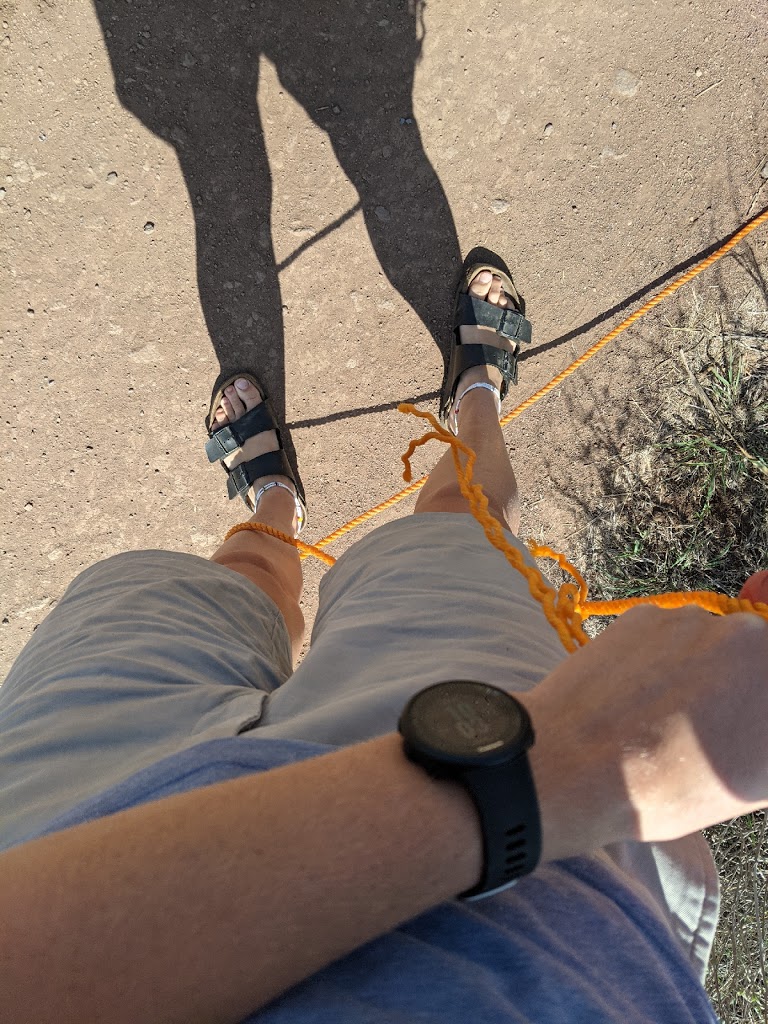
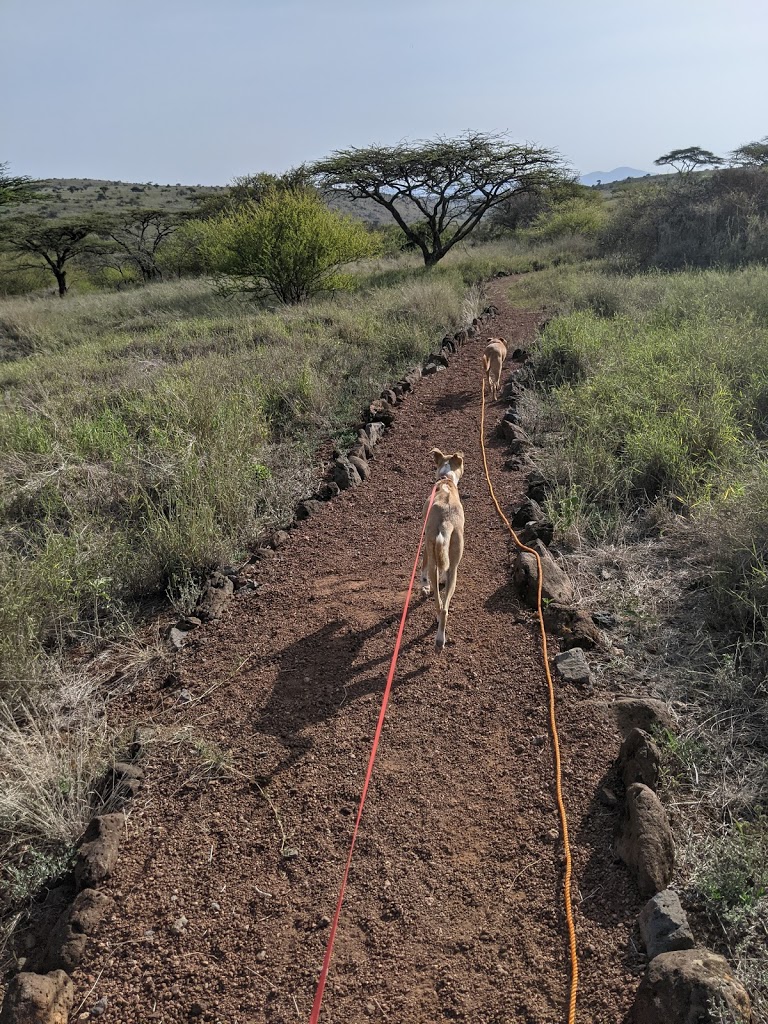
On the walking front, I am trying new techniques to be able to give the dogs a bit more freedom without actually letting them off the lead. This was the latest idea:
Rafa is basically just on a long piece of rope, it’s not the most technical of leads but it worked ok on the bigger paths but as soon as we get to the smaller footpaths through the bush its a nightmare so I might have to go back to the drawing board on that one. Meanwhile, at home Roo has made the hole in the living room bigger to ensure she can get outside whenever she needs and never gets left behind.
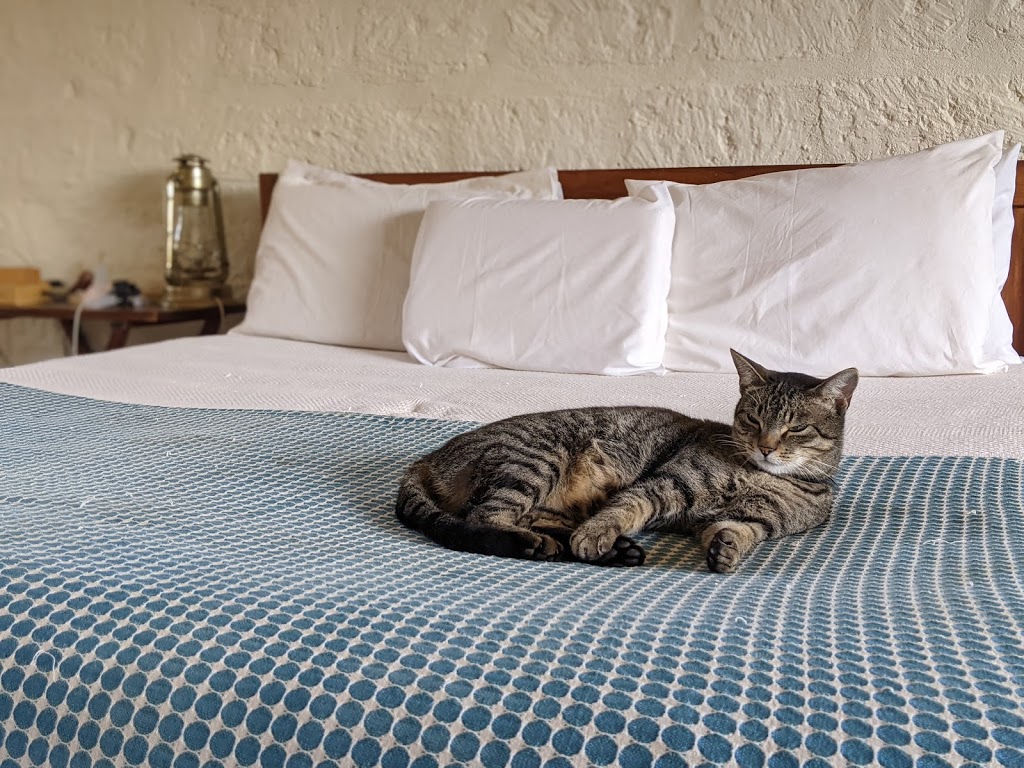
Whereas Duma is content to lay around on the bed like the queen that she is
Duma on our bed
The fence is coming along well and it will definitely be big enough so Roo cannot jump over it.
New fence for the extended garden
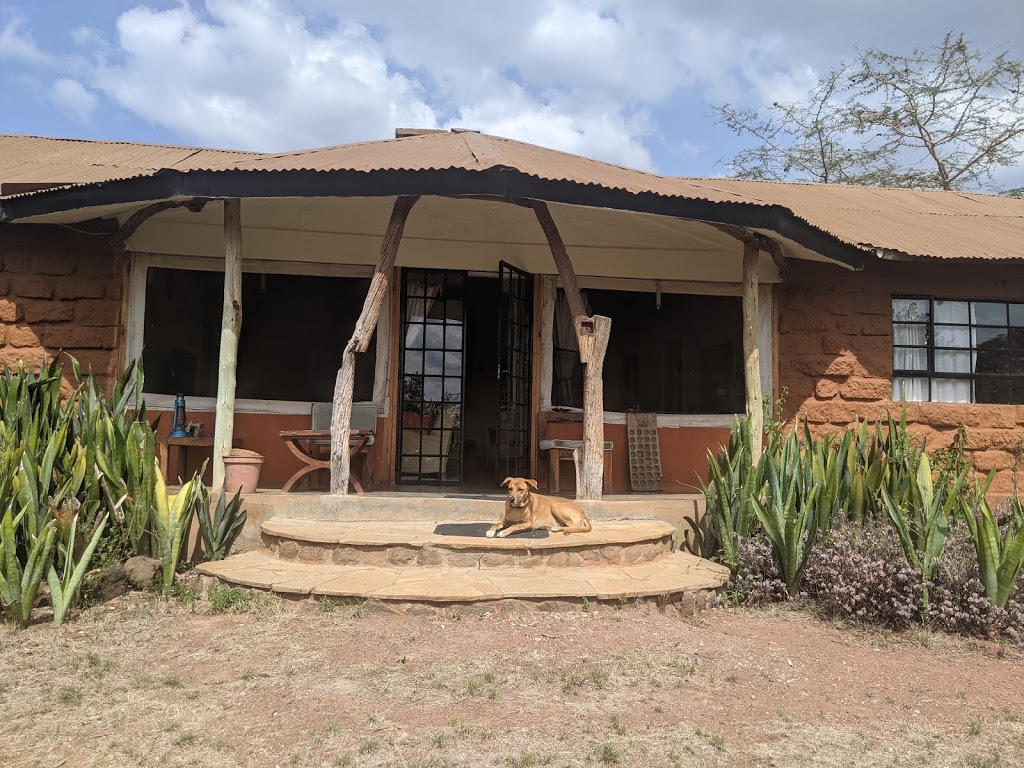
Front of the house
Sunset at Lewa
I went on a game drive the other day but we, unfortunately, didn’t see that much except for this beautiful secretary bird, so named because they look like a secretary (of course!) Anyway I’m sure there will be more to see next time, luckily I live here so I will go again another day. Other than that I have been spending a lot of time on my website as I actually want it to be ready and finally online. The target is for it to be up by the end of the month so watch the space on that one!
Sorry for the boring blog but that all I have for you for now haha!
I woke up early today with great plans (ok not that great – just the usual dog run/walk/stumble). However, Roo had made different plans for me. I spent the morning cleaning up Roo’s diarrhea, despite the fact that, as we did discovered just yesterday, Roo can escape any time she wants out of the window (she has figured out how to push open the velcro herself) evidently she did not think that diarrhea was reason enough to escape to be able to do her business outside. Instead she went in no less that 3 our of the 4 rooms (the door to our room was shut). Thus it ensuring that she soiled every room available to her, including 2 of the newly washed carpets. In the long term her not escaping in the middle of the night into the wilderness to do her business is a good thing, as it evaded the very real risk of being eaten by a predator, however when cleaning up 3 rooms of dog poo at 6:30 in the morning, one can’t help but wish she had taken the risk!
Sorry to keep on the topic of poo, but even Duma, despite now being able to go outside wherever she pleases (except at night) still decided to come back into the house to do her business, but at least she did it in her litter tray.
Anyway, despite the bad start, it didn’t take long before our day got better. The early morning cool (temperate wise, not status wise) dog walk turned into a later morning, slighter hotter, slow stroll, giving us time to take in our surroundings. A glance to the left along the camp road to see mount Kenya clearly in the distance, a little pause to admire her beauty, and along comes my favourite animal, a giraffe, followed by 2 other adults and a small baby (I just googled what baby giraffes are called – calves apparently) strolling nonchalantly in from of mount Kenya to make the perfect picture to put a smile on my face. Of course, I didn’t have my camera with me so a phone picture/video will have to do for you to get the idea.
If you look carefully you will see 3 giraffes
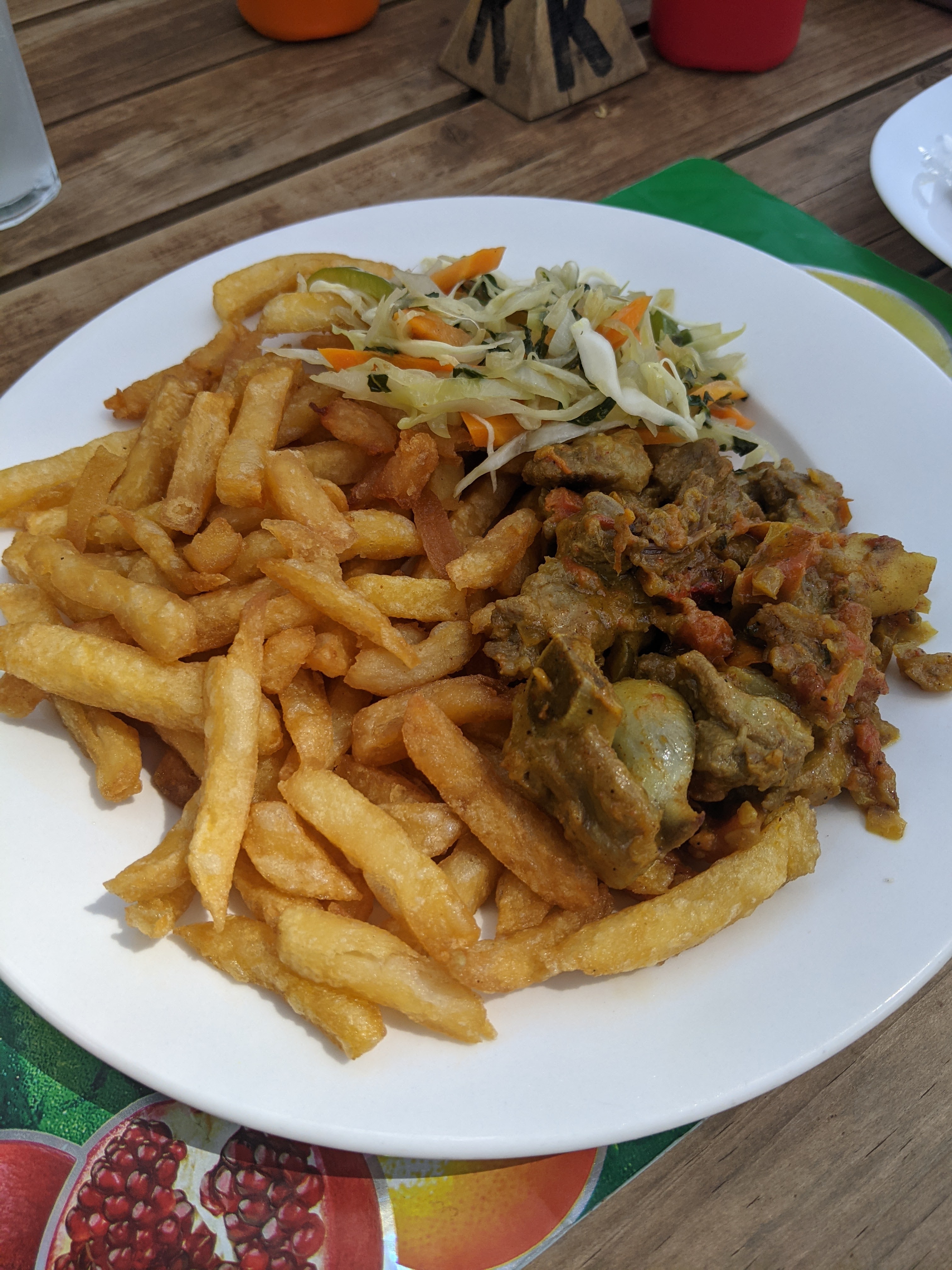
In the afternoon we went for a drive and to a little lunch place on the way to Nanyuki, it was a proper Nyama Choma (grilled meat) joint and I had a delicious Lamb curry and a lot of chips and Charl was very happy to get some decent lamb chops.
This place also had a beautiful shop, the type of shop where you want to buy everything in it! Lots of little trinkets and also useful things. It would also be the perfect place to try and stock our prints so we have taken the owner’s number to see if we can get in touch to speak to her about having our prints on display and them getting a commission if they are sold. If that’s not a reason to give me a kick up the arse with editing photos then I don’t know what is.
On the way home, we attempted to find the shortcut but took a wrong turn and ended up going the long way through the beautiful forest. Past some ostrich, zebra, oryx, etc every drive is a game drive ?
This morning I just went for a stroll with the dogs, less stressful for everyone involved. No real animal encounters today. You really have to get up and out before 7:30 to be able to get a decent walk in before it gets too hot. Basically, you have 3 hours to do activity in the morning (depending on what time you wake up) a whole lot of hot day time and then from around 5:30 in the evening its cool enough to exercise, however, as anyone who has been to Africa before will know, it gets very dark very quickly. It’s like someone switching off a light and bam it’s dark and you don’t want to be caught around here in the dark, especially with the animals, you really don’t know what predators might be lurking. Lewa is close to the equator so there will be only a small variation in the weather throughout the year and the sunset time doesn’t really change either. Lewa is cold at night and early in the morning which is actually quite nice, it makes it easy to sleep at night and also allows for cozy fires and cuddles with the cat as she is only nice to us when she wants us for warmth or food ?
Today we decided Duma can be let out, as I said she definitely has some wild cat in her, she is such an outdoors animal it would be cruel to keep her locked up in a house all day, every day.
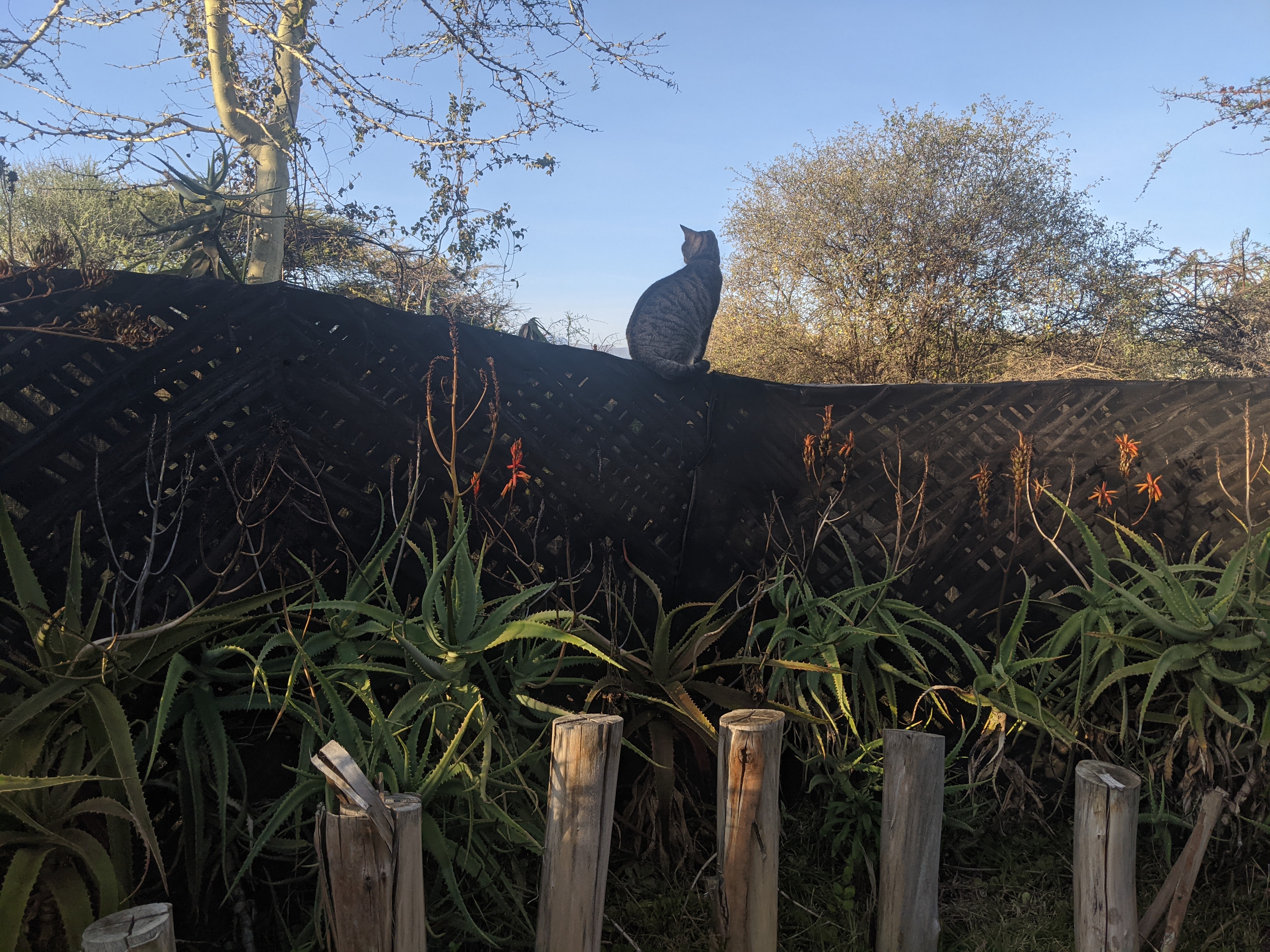
She was definitely on the fence about what to do with her newfound freedom:
She spent a lot of time there, not really knowing where to go next… she then decided this was the place to go:
Like a cat on a hot tin roof (sorry I couldn’t resist) she strolled up and over the peak and disappeared off into the distance. I was nervous about letting her just roam around, but I don’t think she really went far, she also decided by 9am it was too hot, and came back inside to lie around in ‘her room’. We have a three-bedroom house and there are just 2 of us, when we first got here Duma was put in one bedroom to get used to this being her new home, that room is now always referred to as Duma’s room, it probably always will be. If you’re planning to come and visit us be prepared for there being a cat in your room, should you dare to choose to occupy ‘Dumas room’
Duma in ‘her room’
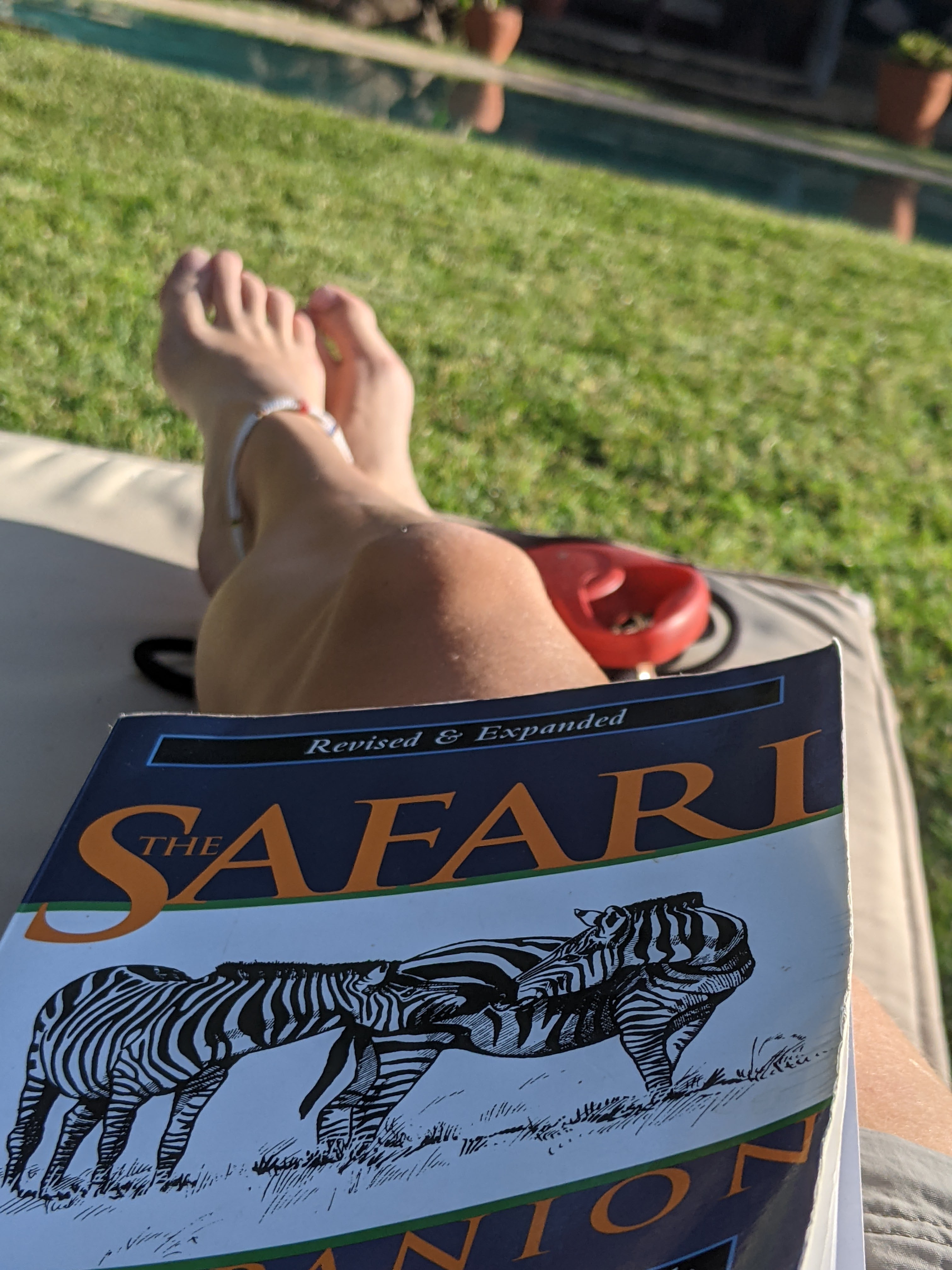
In the afternoon I gave the dogs some freedom to roam around the lawn while I picked up my book for the first time since being here. The dogs ran around playing, sniffing, and chasing small creatures in the bushes before returning to me huffing and puffing, clearly very proud of themselves for protecting me from the mongoose and squirrels.
P.S if you want to understand animals and the bush then this is a great book:
While the dogs and I sat in the garden Duma decided the next place to go with her newfound freedom was the office to see Charl:
Charl and Duma hard at work.
The time between dog walks (my life at the moment feels a little bit like I’m filling time between dogs walk) was spent on photos. I would love to have typed ‘editing photos’ there but I’m not even at that stage. I’m still at the stage where I am deleting the crap photos and choosing which one of the 20 basically exactly the same photos (dam burst mode) is a teeny tiny bit better than the other 19 and is, therefore, the one I put into another ‘chosen photos’ folder…At this rate, my website will be ready in 2031.
Charl needed to go for a run this evening so he took one dog and me the other which made life a lot easier!
However, it didn’t take long for the dogs to get tired (after running around on the lawn earlier) so I put them back in the house and took the chance to do my first run without any animals. Running without the animals felt like I had suddenly been released from dragging a tyre behind me (world strongest man style). I felt like I was going so fast and I was able to work up a proper sweat and run without having to stop every 2 seconds. I mean my watch’s statistics definitely didn’t match up to how fast I felt like I was running but it’s all about the perception right? I miss running with my dogs off leads!
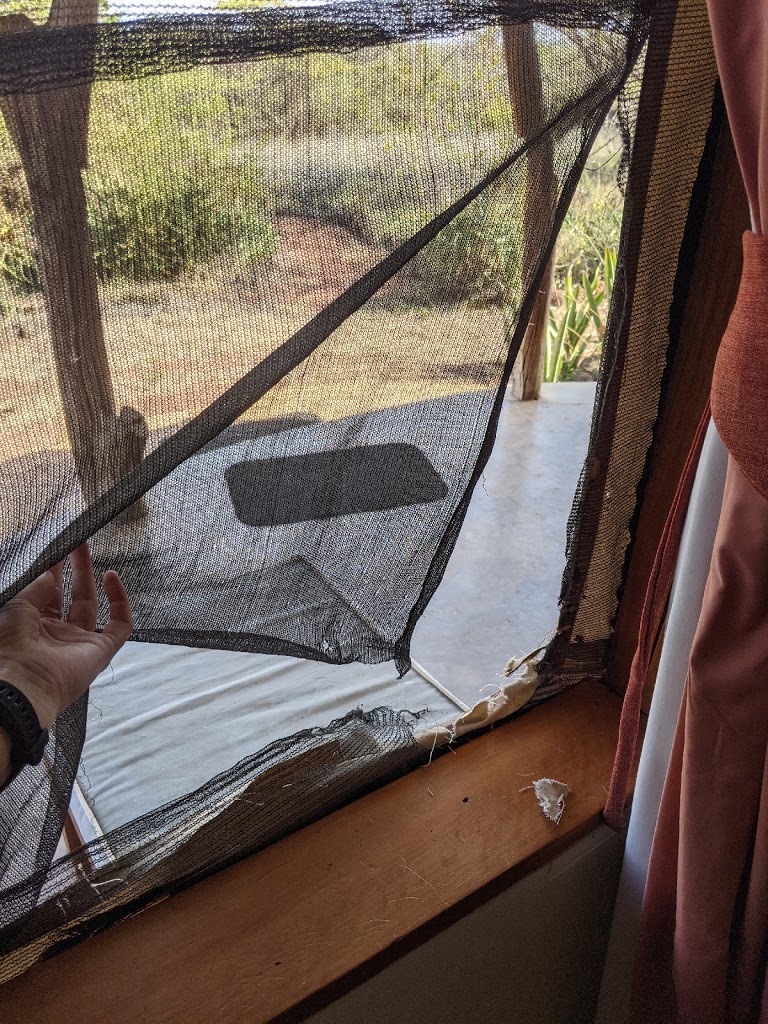
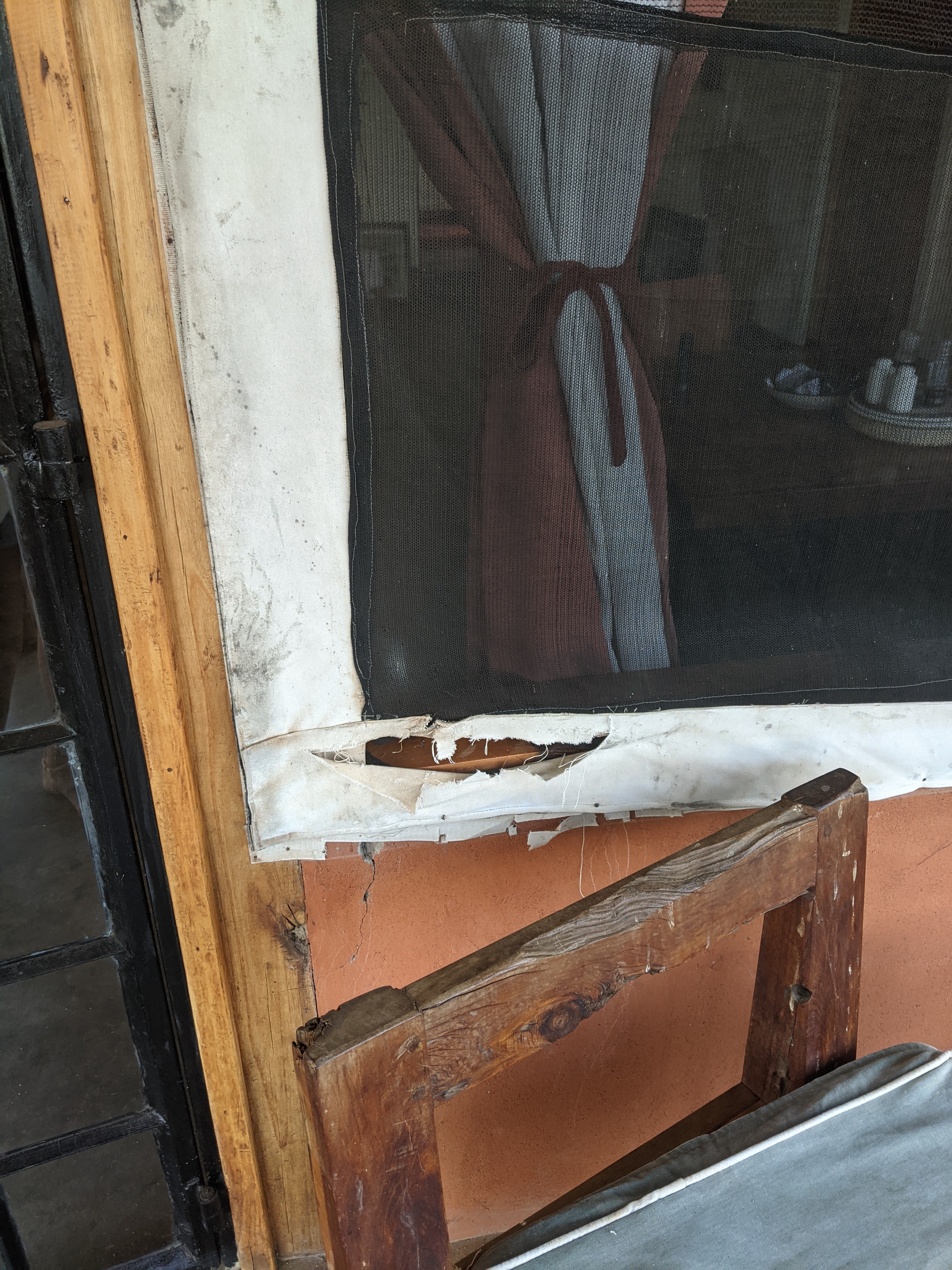
Roo apparently also missed it as she suddenly appeared on my run, luckily while I was on the home stretch. She takes after her name, Roo as in Kangaroo can jump the gate in the garden (which I already knew) so I shut her in the house while I was out so I was very surprised to see her next to me. When I got home I discovered that she has found (and made bigger) a small gap between the mosquito netting (we don’t have windows – just canvas and nets for windows in the living room) and the wall and has squeezed through to freedom.
Gap where Roo escaped
This is very worrying as it means she can also get out at night and who knows what she might run into at night. So now when we are both out, her, and as a consequence poor Rafa also, have to be shut in the kitchen so she cannot escape.
Luckily the work is starting on the garden tomorrow to make it bigger and the fence and gate higher so eventually I will be able to leave them in the kitchen with access to the garden also! Hopefully, it won’t take too long to build the new fence!
Yesterday I made a conscious effort to have proper Kiswahili lessons and realised how many bad habits I have already picked up, the advice from my Mwalimu (teacher) was to ask everyone to speak to me only in Kiswahili so be prepared for lots of miscommunication and misunderstanding!
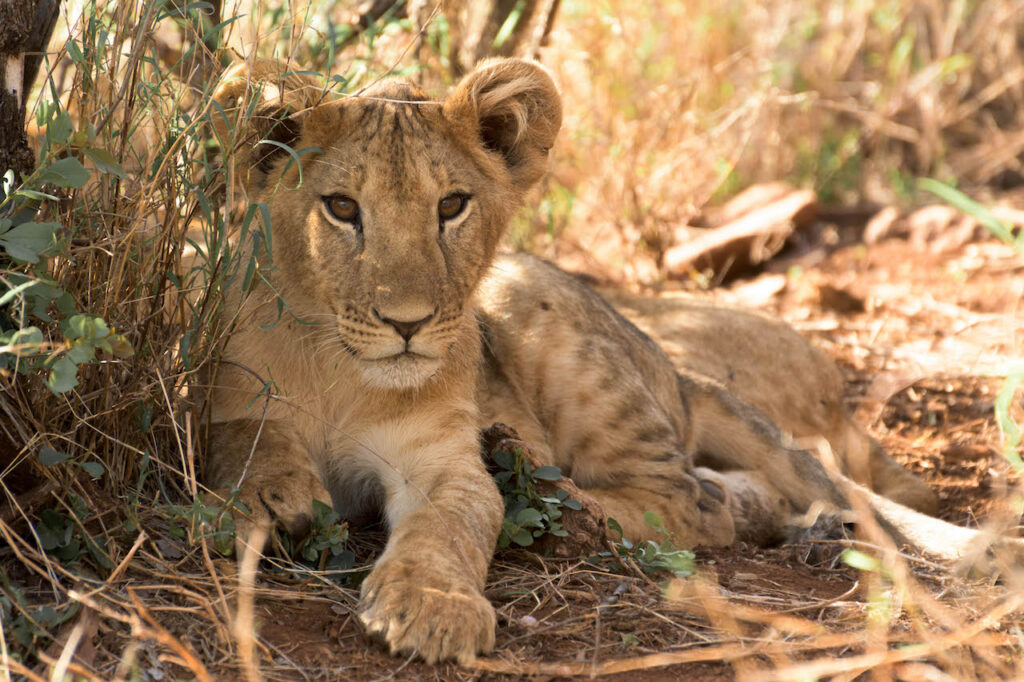
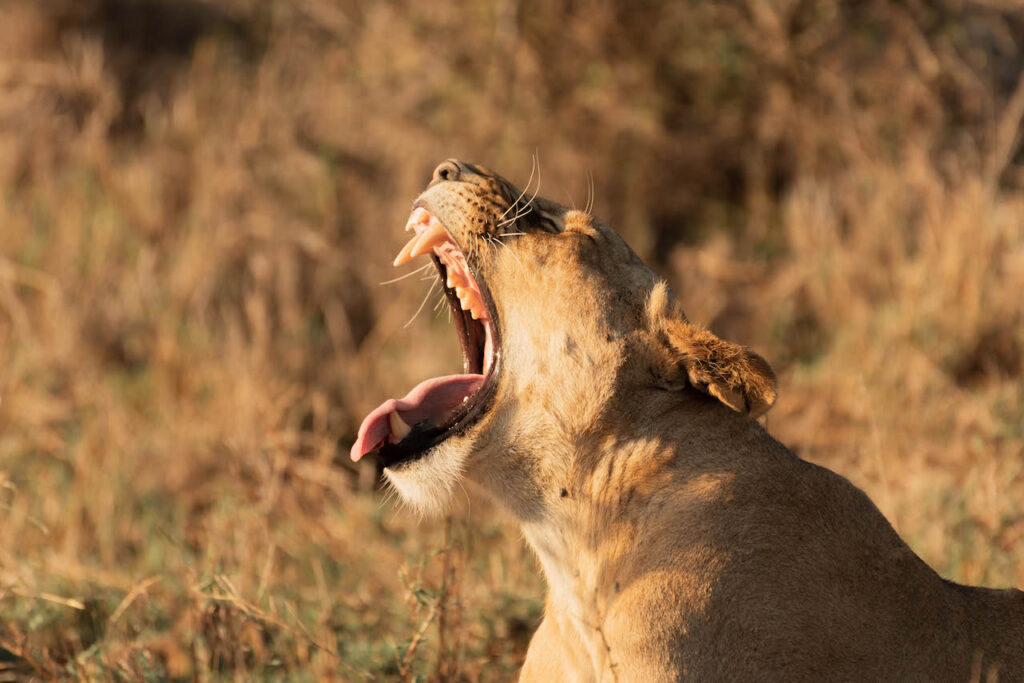
In the afternoon I joined Daniel the guide on a safari, I sat up front with Daniel in an attempt to absorb all of his information and skills. One thing I definitely need to improve on in order to become a guide is getting eagle eyesight, he literally spotted a lion from miles away from a tiny movement of the lion’s ears flicking flies off. We traversed off-road (also need to improve my 4×4 driving skills) and found the originally spotted lion, plus 8 others including 3 cubs, 3 sub-adults and 3 adult females. It was amazing to be so close to the lions who were so relaxed. One of the adults was ‘bathing’ one of the older cubs while the three young cubs nursed and another adult rolled on her back away from the main pride, taking some ‘me time.
I of course took a million photos and haven’t gotten around to editing them yet (unemployed life is so busy) so they will be added in at a later date. Heres two I couldn’t resist editing:
16th May
Another run to start the day, I use to word ‘run’ very loosely, its more of a stumble but today 2 dogs and I stumbled 3km so we are slightly improving. It is difficult to run around the camp as there is limited space so to challenge ourselves and we ran the hill down and up from the hide twice, not managing to run all of it both times so that is something to aim for. Both times there was nothing to observe at the hide, but also we didn’t run into any Elephants or Rhinos today so thats a plus.
Today I attempted to work on my website, for those of you who know me well, know that this website has been a LONG time coming, the website is supposed to showcase my photos and allow people to order prints, calendars etc, it has however been in a state of unreadiness for nearly a year now ?
It’s a combination of me not knowing anything about designing a website, not having fast enough internet to be able to load everything without wanting to throw the laptop through the window, and there being a million unedited photos on my hard drive, therefore not having them ready to put on the website. The problem with living in Africa is that whenever you get time off from work you don’t want to sit in front of a computer editing photos, you want to go and explore amazing, wild places and take more photos… and that is how you end up in my predicament. I mean I literally can’t complain, I have been able to explore so many ridiculously amazing places, maybe one day I will sort through my photos and be able to share that beauty with the rest of the world.
Charl got some time away from work in the afternoon so we explored outside the conservancy a little which meant we were finally able to let the dogs off the lead, giving them some much-needed freedom and a chance to run around and use up some energy. There was of course still plenty of goat and cows to chase, something Rafa sometimes does and sometimes doesn’t do… you get a split second to make a dash for his collar when you see his ears prick forward and if you miss that split second he is off! Anyway, it was worth the risk, I would rather he chase goats than lion or giraffe or anything else found in the conservancy. Disclaimer, he doesn’t chase to kill, he just likes the chase. We are working on it with training but at the end of the day dogs like to chase things!
We jumped back in the car to get home, again you can see the difference in the dogs, Ruu is just needed and thinks she is a lap dog and all Rafa is interested in is jumping out the window and chasing anything with a pulse!
Duma is beginning to enjoy being a house cat, she basks in the sunlight and meows loudly when she wants food, being in the house all the time allows her to demand food 24-7!
I’m looking forward to Duma being released into the wild!
Today I was joining a guest on their walking safari which I was looking forward to, however it meant a very early rise to be able to walk and feed the dogs before 7am!
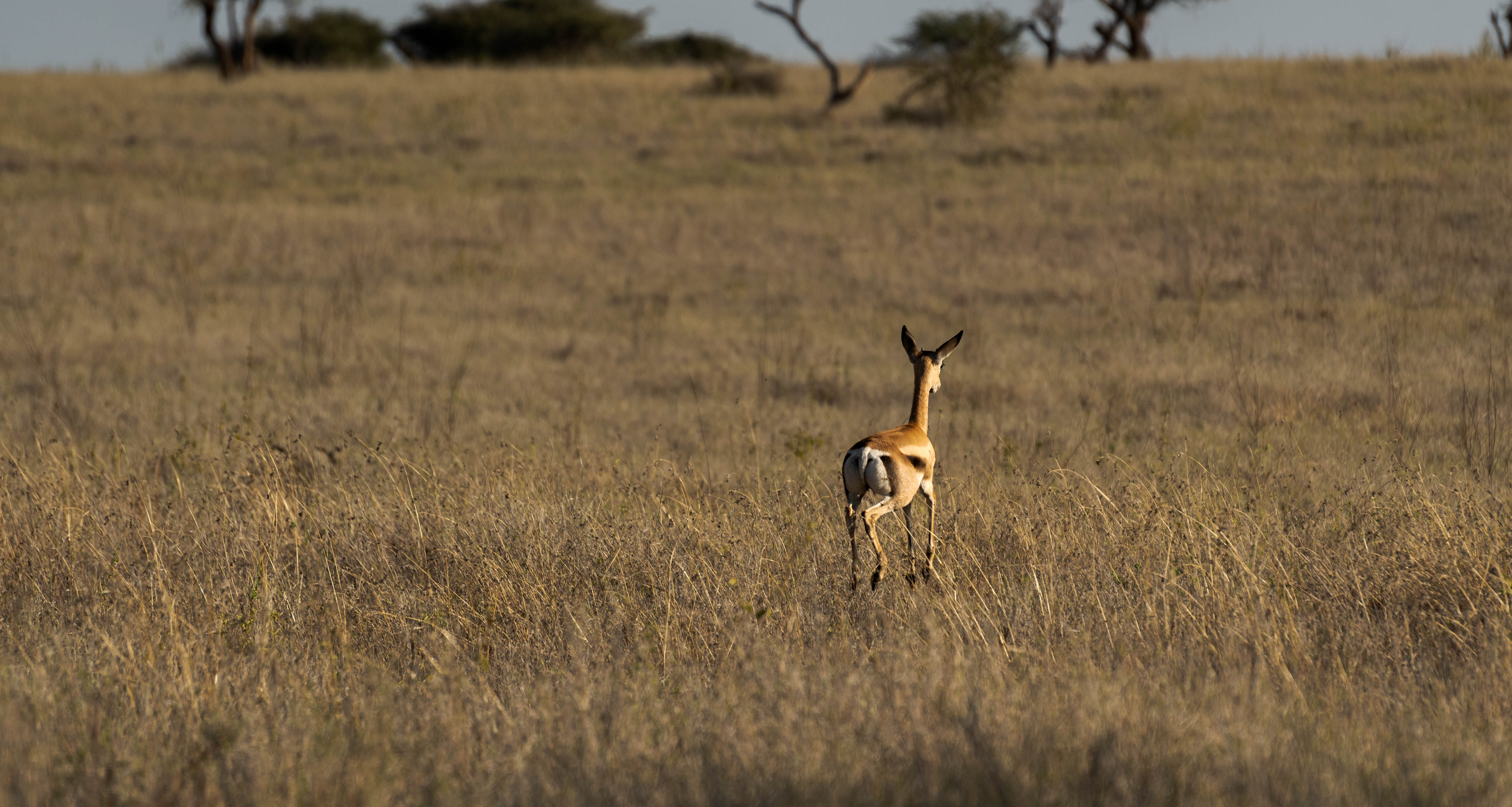
7:00am turned into 7:30am (a mild case of Swahili time) and then we were off. We were brief by the man with the gun, told to walk silently and in single file, never in front of the man with the gun, seems to make sense to me. Immediately out the gate we saw Hartebeest, Impala and Grants Gazelle, who were ‘pronking’ away from us. Pronking is the springing jumps they do where they have all 4 feet in the air simultaneously.
Grants Gazelle pronking
We discussed the types of gazelle found in Lewa (not Thompson apparently – due to the type and length of the grass) and then continued our walk. Walking safari are amazing for reasons different to your normal safari;
for one you are not stuck in a vehicle,
you get to do some exercise, which is quite difficult on normal safari holidays which usually comprise of light breakfast, game drive, real breakfast, rest, lunch, rest, afternoon tea, game drive, dinner, bed.
you get to take time looking at the little things, including termites, ants, droppings, tracks etc
you learn a lot
There are of course many other reasons but this isn’t a walking safari advert so I won’t go on.
However I really enjoyed the safari and quickly learnt that should I ever achieve my dream of becoming a guide I have a LOT of learning to do! For example, our guide taught us about intimate social structure of termites, I learnt there is a queen, a drone (who mates with the queen) workers and soldiers within one colony. I learnt that when the Queen can no longer produce offspring she is fed a special diet to help her, if that doesn’t work she is licked to death by the rest of the colony, its a termite eat termite world out there! We investigated Rhino middens (a place where Rhino go to do their business) and identified if it was a male or female who had been there (males leave kick marks where they kick back their poo to spread it around) and which type of Rhino the midden belonged to, white or black. White Rhino are grazers (eat grass) and black Rhino are browsers (eat from bushed and trees) therefore Black Rhino middens have twigs and stick in their poo and white rhinos don’t. We identify Hyena poo by the colour (white) due to the calcium in the bones it eats as well as various other types of poo by size, shape and texture! Our guide, Daniel knew every name of every tree, what it is used for and its Latin name… I have a lot of studying to do!
A tree that I can’t remember the name of
Studying the termite mound (mount Kenya in the background)
Mout Kenya
We walked to a small waterfall within a cave and studies some rock art which was drawn by Maasai with red ochre many years before (don’t ask me how many years).
Studying the rock art
Once through the cave we came out the other side of the valley and started heading back to camp. The walk was about 2 hours and I returned home to try and do some training with the dogs and have some breakfast.
In the afternoon we went for sundowners and saw all the cars (the guest go on safari before the sundowners, while the staff set up the bar and chairs etc) stopped on the road at the bottom of the hill. They all came through eventually after excitedly telling us about the 3 lion cubs within eye sight of us, needless to say when we tried to go see them after sundowners they were gone ? Oh well, plenty of time for lion cubs in the future.
sundowners set up
Another thing I will need to learn about if I wish to become a guide is the star constellations and I also want to learn how to photography starts at night, although I am quite impressed by my phones ability…
Check on the swifts and release them from their box and they manage to fly back to their nest ? hopefully what ever was in there last night that disturbed them has gone away.
I’m trying to start each day with some exercise, especially as the Lewa half marathon is coming up in June (it is a virtual event for everyone this year, but we are getting staff together to run it inside the conservancy). I of course also need to exercise the dogs so I and trying to kill two birds with one stone. Today I though I would be brave and try and run with 2 dogs at the same time! Another bright idea was to put them in a harness so I might have more control over them… Worked fine with the *kubwa dog, although I am beginning to think a harness also gives the dogs more pulling power but stop him from slipping out of his collar so its a pay off. The *kidogo dog however (think greyhound build, with a funny ridgeback) managed to slip out of her harness within 5 mins of the run, this is unsurprising given that the harnesses are a hand me down from my friends dog, a very large standard poodle, who when on his hind legs reaches over 6ft. The running story was very similar to yesterdays except off course with added tangling of leads and legs and being pulled in two different directions at the same time, one from the waist and one from my arm. Maybe I need to invest in a waist belt that can secure two dogs at once??
On the way back from the run, I glance in a bucket to find a (very venomous) puff adder all curled up, apparently rescued from a drain this morning. The bucket was placed in the sun so she could warm up and then she will be taken out to the bush to be released later. Despite her being in a bucket, which I was assured she couldn’t get out of, and her being very still due to being cold, I was still a little nervous about getting close. She is a formidable creature, apparently, according to Perry’s Bridge Reptile Park, she can strike within 0.25 of a second of being threatened (information found onThis webiste). Thanks to that website I have also just discovered some other interesting facts about Puff Adders:
They can replace their teeth up to 6 times (like sharks)
The name puff adder comes from the sound it makes as a warning to try and keep people/animals away
The puff adder will only strike when trying to kill its prey or when absolutely necessary, other than that she will try and move away.
For those of you wondering how I know she is a she, apparently it is to do with the tail (which you can’t really see in this picture). Males have longer tails and females shorter, males are also usually bigger (although I have always thought that a difficult way to tell when you only have one in front of you, much like when you are told one identical twin is taller than the other.
Their fangs can grow up to an inch in size
The fangs are hinged so they only come out when the snake opens her mouth, other than they are protected in a sheath
Anyway after that excitement I headed home for my healthy smoothies breakfast and cuppa tea.
Later in the day we went to release the adder back into the wild, she was a little disorientated but she went off fine.
In other news Roo is able to jump the fence around the garden so we are working on making that taller and the garden a little bigger so the dogs have more space to run around in. I am also trying to find ways to entertain the dogs after the morning walk. Once they have had a sleep they then spend a lot of time following me around, wanting another walk. I am going to try and find somewhere I can drive to that means they can be off the lead and run free but that will take a bit of time so I will update when I have found somewhere. In the mean as I said I’m trying to entertain them more at home, they do play together but not all the time and Roo in particular gets bored so I have started using a kong type toy to feed Roo. She was a little frustrated with it at first but then figured it out..sort of. My only question is how do the dogs actually get all of it out, surely their tongue can’t reach that far??
In the afternoon Charl and I attempted to clear the walking trail a bit more to make it a bit easier to walk/run with the dogs, but we didn’t get very far so will have to continue tomorrow. Charl is at work hosting this evening so this is my first evening alone in the house… that means I get to watch crap TV without anyone complaining ?
Today I didn’t do much, I spent a lot of time in front of the computer editing the jackal cub photos and old photos which I hadn’t gotten around to yet. I also attempted to make the house keepers less scared of the dogs by showing them some of the tricks they can do and encouraging them to ask the dogs to do it, they asked for the trick but was too scared to feed them the treat 😉 we will keep working on it.
Dog recall training today involved one dog at a time on a long line (well the African version which is a rope) attached to their collar. This time when they ignored me after calling them back I can reel them in like a fish on a hook. After about 30 mins of this with each dog I then let them off the leads on the lawn as there was no guest as I feel sorry for them not being able to run free and expel their pent up energy so they ran and played and ignored me when I called, therefore undoing all the hard work I had just put in. It was nice watching them run around though and be free. Well one of them ran…
I realise I haven’t mentioned the cat for a while, poor Duma has been in the house the whole time, there was one afternoon where I let her into the garden and followed her around until she figured out she could climb the fence and escape so she promptly went back inside. She sleeps every night on the bed, this cat is only affectionate when she is cold and its get cold here at night, so she curls up on my legs, which is really comfortable during the night..
She will be let out soon, we just want her to get used to her new home and know where it is. We can’t keep her inside for ever she is definitely part wild cat, she is an amazing hunter and has fully black paw pads, so we will let her out but make sure she is always inside at night as we have been informed there is a resident leopard near our house.
Today there was only one guest in camp so we had dinner with her so she wasn’t sitting on her own. On the way to dinner we noticed about 7/8 swifts fly abruptly out of their nest in the roof off the main area and hit the ground. Swift cannot fly well at night they get very disorientated as they should be snuggled up in the warmth of their nest. We attempt to pick them up and throw them back in the direction of their nest but they don’t make it and come back to the ground. We are now worried about snakes and other creatures eating them as well as the cold weather effecting them during the night, we decide to collect them all up and put them in a box inside for warmth and safety during the night. There must be ants or bats or something disturbing them in their nests so at least we can try and keep them warm in the night and let them out tomorrow morning.
We then continue to diner with the guest, who is a very adventurous Kenyan lady who has been living in the USA for 16 years and has now moved back to Kenya. She said she will get us on a few Whatsap groups to try and introduce us to people so we are not just recluses up here on our own!
Today I am off to Nanyuki for the second attempt at getting a SIM card. I take the dogs for a quick walk, feed them and the cat and then leave at 8.
Early morning walks
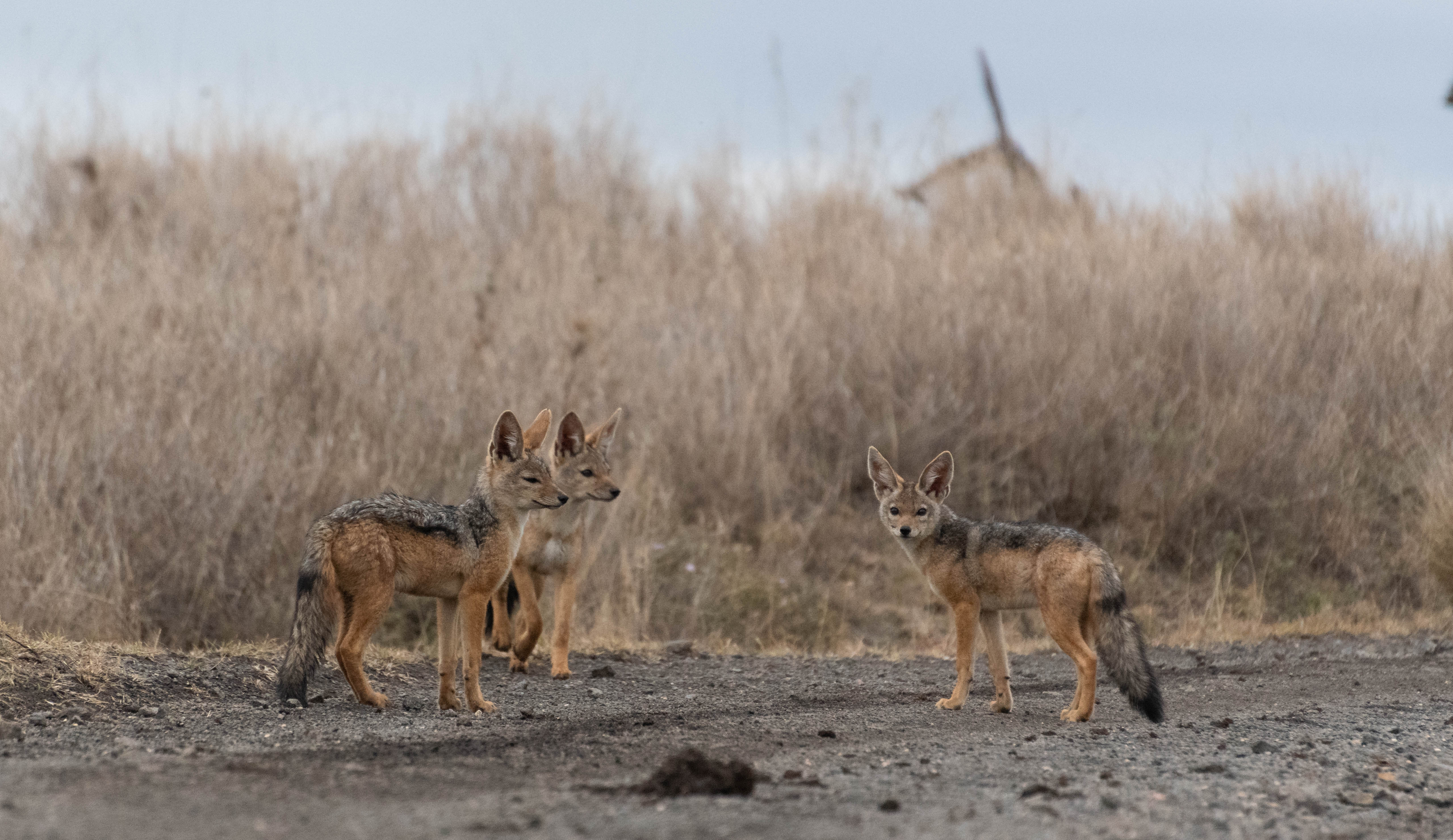
Going anywhere here means a game drive on the way, which is great. We saw Bat eared fox, the jackal cubs, this time 4 of them and mum, 2 tawny eagles as well of the usual zebra, giraffe, etc.
I realise this is just 3, I couldn’t get a picture of all 4 together
I am attempting to learn Kiswahili so use the car journey and a Kenyan colleague to teach me some new words on the way. Words retained: 0 more work to be done.
SIM card registration successful, you can’t just pick up a sim from the pound shop like you can in England, you need to register it to you with your passport, another way for Big brother to keep an eye on you. I also set up Mpesa which is a way of paying for things on your phone, many Kenyans Malawians, Tanzanian’s, and I am sure other countries, don’t have bank accounts they just keep money on their phone, you can send money to other people, pay bills, buy data and airtime (no contracts for phones out here) pay for your cable TV and electricity it’s great, I think the UK needs to get on board – unless I have been out of the country so long that it does actually exist now?
While in Nanyuki I took the opportunity to get some junk food, KFC to take home for dinner (we didn’t have a KFC in Tanzania) and get a bit of shopping (Amarula, Jamesons, dog treats – all your necessities) checked out the local Mitumba – a second hand clothes market, which is where ALL of my clothes come from these days and then back to Lewa. On the way back we saw a beautiful (very poisonous) **puff adder on the road, trying to get some heat from the sun. We watched her on her way (interestingly they don’t slither like you would expect, they undulate so it almost looks like they are walking.
** Edit: after doing some research on Puff Adders I have to now edit this and put ‘very venomous’ not poisonous – poison is something which is inhaled or swallowed, Venom is a specific type of poison that is injected. So there you go… every days a school day.
We got back to the house at around 4 (there is no quick pop into town, it’s about at 3 and a half hour round trip and everything takes time). Quick dog walk, then the other manager joined us for our junk food dinner and a few glasses of wine.
I appear to be in a habit of waking up early so I attempted to make the most of it and go for a run before it gets hot/starts raining. Again I run with one dog at a time, I take the big dog Rafa first all was going well until he sees something and makes a dash for it, yanking me forward down the hill and into the bush. Unbeknown to me my new fancy running watch which was tracking my run decided that I had had a fall and stopped tracking my run to send out an SOS and GPS tracking signal to my next of kin (Charl) to tell him where I was. I get the dog back, get back on the path and continue my run, 20 minutes later I glance at my watch to see ‘GPS tracking signal on’ and realise it has stopped tracking my run and is sending an SOS, I also realise Charl has not come running to my rescue…. So now pissed off that it hasn’t tracked my run properly/completely knackered from running up the hill, I use this as a good excuse to give up and walk the rest of the way home to collect dog number two.
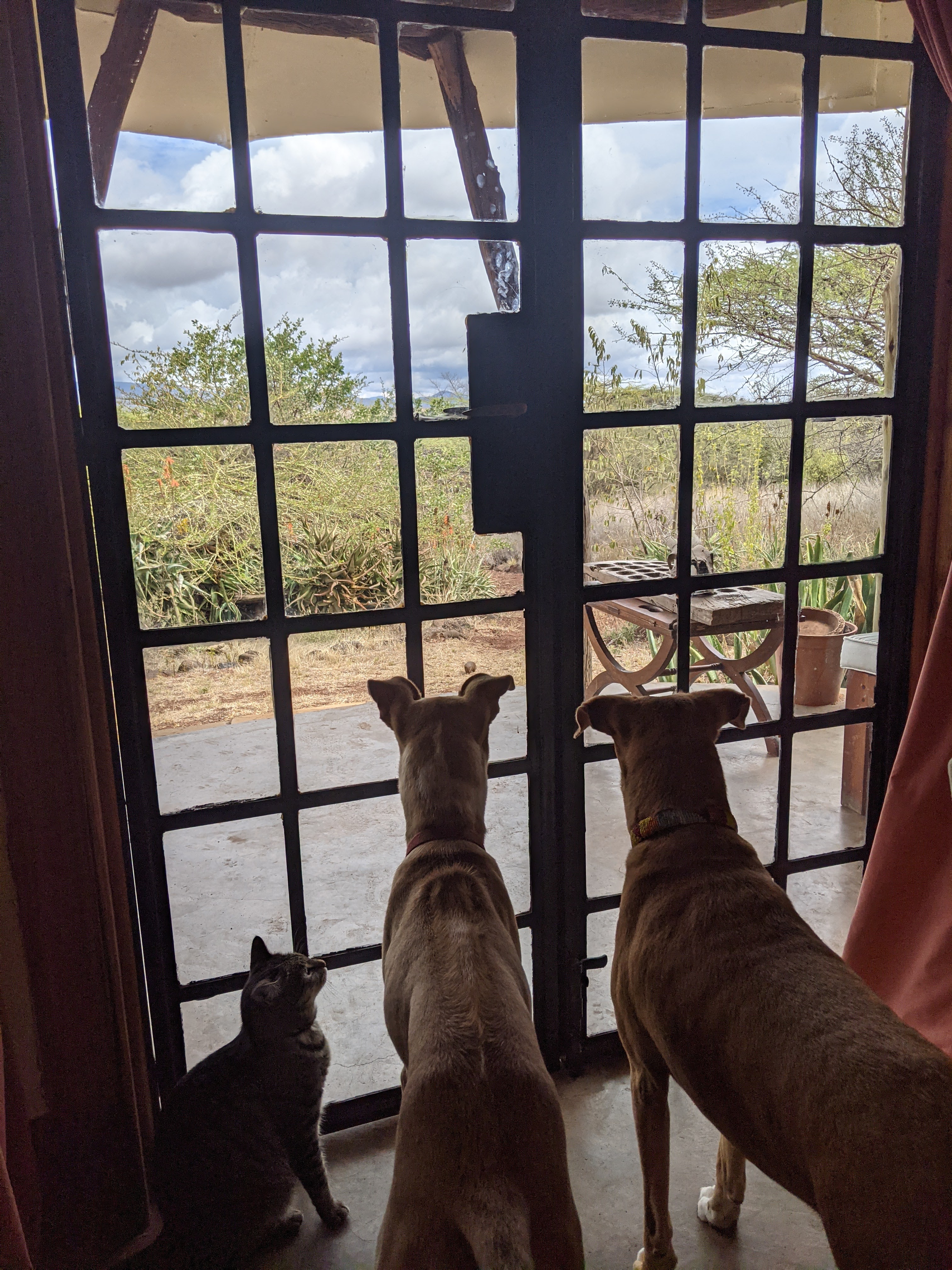
I came out of the shower to see all three animals staring through the glass front door, I went to investigate and saw a big family of dwarf mongoose playing outside, one was very brave a was coming close to the door to tease the animals. The mongoose live under the house so I look forward to seeing more of them, that is of course if the pets don’t get to them first.
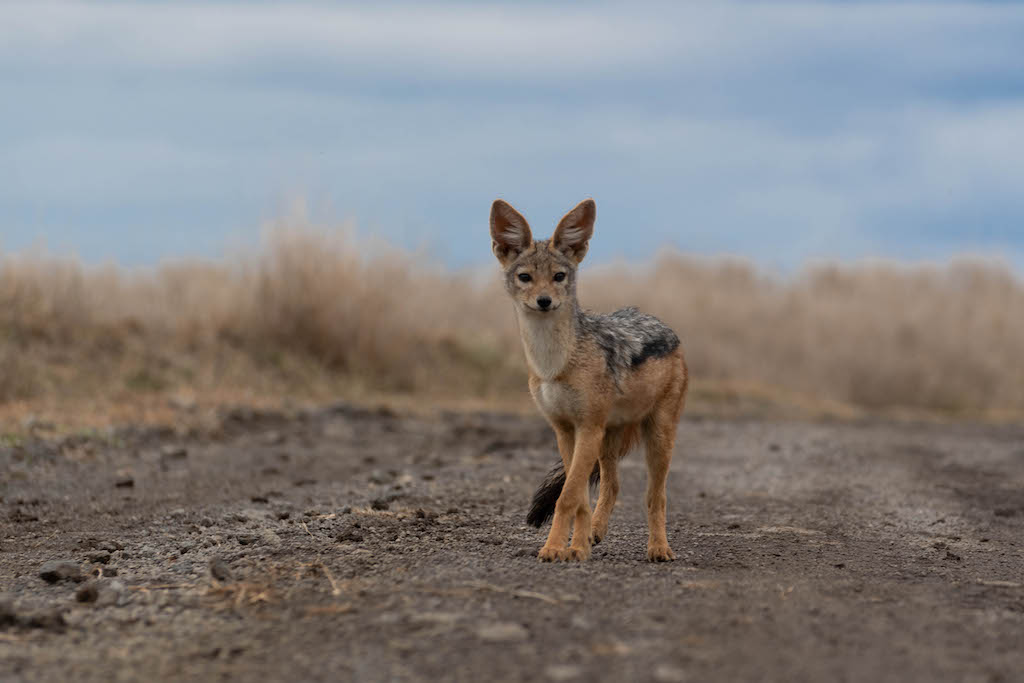
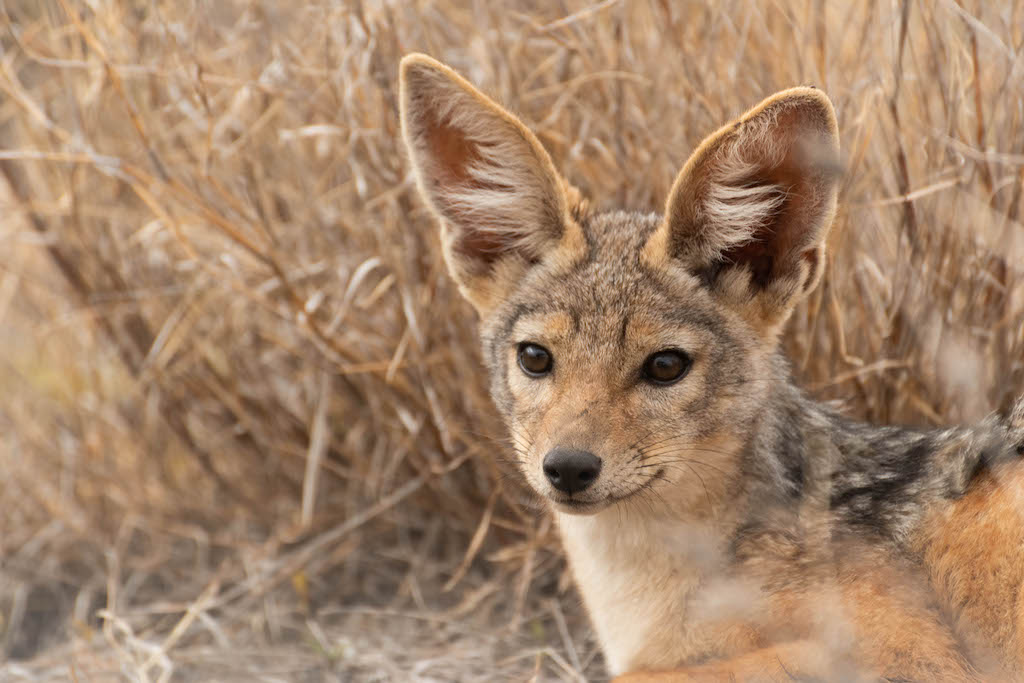
Charl managed to get away from work and we went for our first game drive this afternoon, it was quiet to start but then we spotted a tiny jackal and reversed to get a better look. It was a jackal cub all curled up in the long grass and it was soon joined by two of its litter-mates.
They seemed to be quite tame and were as curious about us as we were about them, they came quite close to the car and were sniffing the air picking up our scent. We spent about an hour or more with them getting some nice photos. That’s the best thing about being on your own with no guest you can sit at a sighting for as long as you want. A lot of guests are just interested in the big five but I like to see the small stuff also. No matter how many times you have been on safari (and I have been on a lot) there is always new stuff to see. I had never seen jackal cubs before, definitely not this close to the car and this relaxed so it was a great afternoon. It was starting to get dark so we headed home.
The night was pretty uneventful and we wake up refreshed. Charl goes off to work (2 min walk to the office) and I attempt my first run. I decide I can only manage one dog at a time on a single track path hacked through the thicket. I’ll be honest, it was not the most relaxing of runs, its goes something like this, dog on lead which straps around my waist we start running, dog needs a wee and stops abruptly jerking me back, dog goes for a wee, we continue, dog runs close behind me, me unintentionally kicking him in the face with every step, pulls dog in front, dog runs really slowly in front of me nearly tripping me up, as he is unsure if I am coming or not, until dog hears something in the bush, dog charges off pulling me by the waist as I stumble over rocks and acacia thorns, yank dog back on track, continue to run slowly, run, stop, pull repeat, run, stop, pull repeat… the cycle continues until I put that dog back and get the next one.I manage 2.5km before I have had enough/I’m too tired/the altitude kills me, not my best run yet but we tried.
View from the hide
The rest of the day revolved around getting our belongings, cleaning and arranging the house, it is a beautiful old farm style house, with three big ensuite bedrooms so *Karibu to friends and family to visit. Most importantly we get the internet and TV set up, a desk put in (for all the work I’m going to do at home) a dining room table and all the bedrooms set up. I whittle away time in between by watching the sunbirds and purple grenadilla in the bird bath in front of the house and put up a bird feeder to encourage more birds. In typical geek fashion I also set up a ‘birding station’ with bird books, tripod camera and binoculars by the front windows in case of any particularly special visitors.
The evening is spent having dinner, watching TV and attempting dog recall training, mainly me calling the dog manically while waving chicken around while said dogs run off in two different directions chasing animals with their noses to the ground.
*Karibu – welcome in Swahili
View from the front door of the house onto the bird bath